Before GPS, Getting Lost Was Part of the Trip. The Road That America Used to Travel.
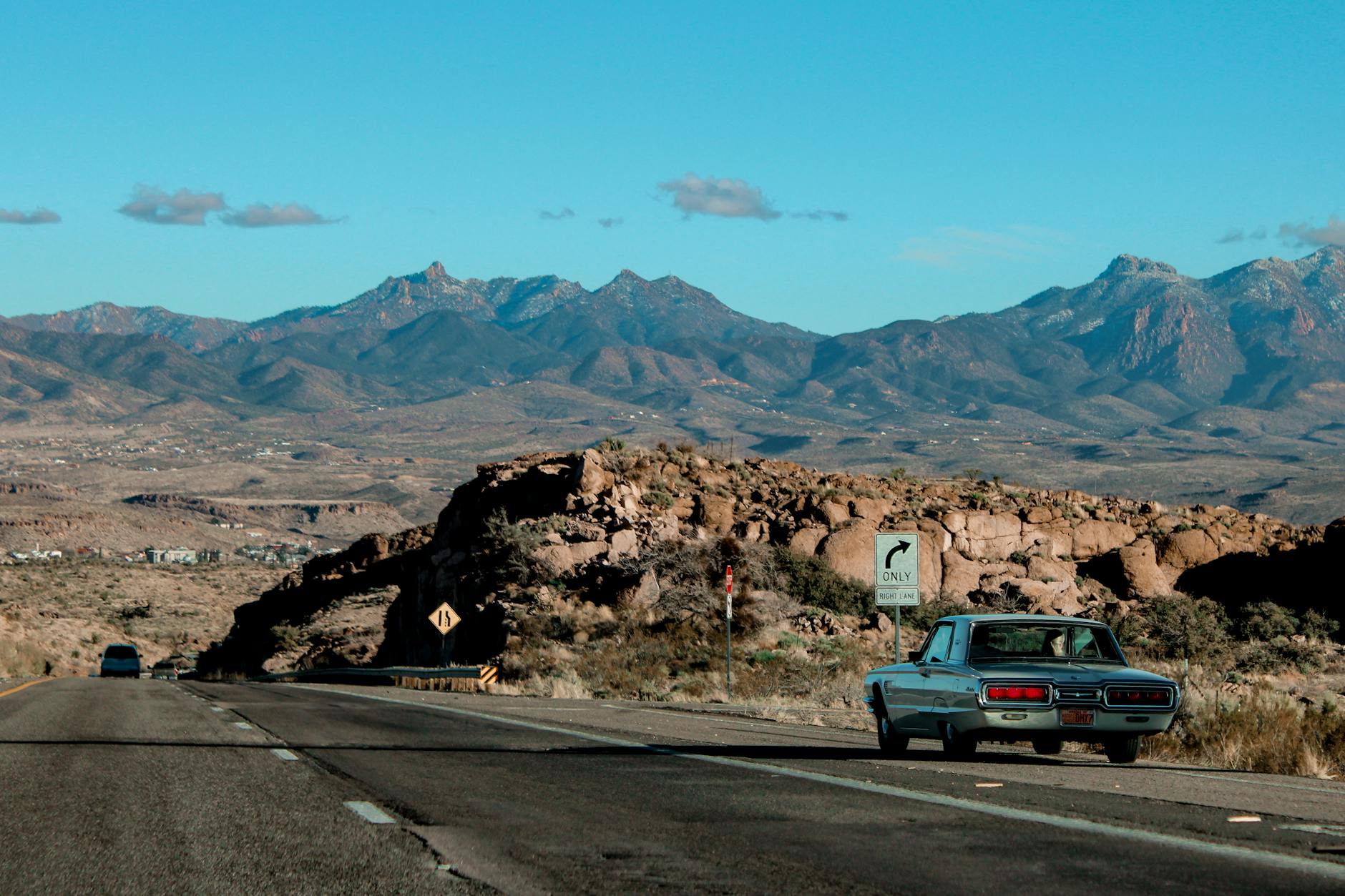
Before GPS, Getting Lost Was Part of the Trip. The Road That America Used to Travel.
Somewhere in a box in somebody's attic, there's a Rand McNally road atlas from 1972 with handwritten notes in the margins. A circled diner outside Amarillo. A scribbled warning about road construction near Flagstaff. A phone number for a motel in Albuquerque that probably hasn't existed for thirty years.
That atlas was a travel technology. And the trip it guided — spontaneous, analog, occasionally wrong-turn-dependent — was a genuinely different experience from the road trip of 2024, even if the asphalt underneath is largely the same.
The Economics of Going Nowhere in Particular
Let's start with the number that tends to stop people cold: in 1972, the average price of a gallon of regular gasoline in the United States was approximately 36 cents.
Thirty-six cents.
A cross-country drive from New York to Los Angeles covers roughly 2,800 miles. A typical American car of the early 1970s — a Chevy Impala, a Ford LTD, something with a V8 and the aerodynamics of a refrigerator — got somewhere between 12 and 15 miles per gallon. Do the math: that trip required somewhere around 200 gallons of fuel, which at 1972 prices cost approximately $72.
Adjusted for inflation, that $72 is worth roughly $530 in 2024 dollars. Still manageable. But here's what makes the comparison genuinely striking: the actual cost of that same fuel today, at roughly $3.50 per gallon for a national average, would run closer to $700 — and in a more fuel-efficient modern vehicle, you'd still be spending more in real terms than your 1972 counterpart despite burning considerably less gas per mile.
The fuel cost increase has outpaced inflation by a meaningful margin, and it's just one piece of a broader shift in what road travel actually costs. Motels that once charged $12 a night along Route 66 now — if they still exist at all — often run $80 to $150. The $1.50 truck stop breakfast has become a $14 diner plate. The American road trip is still possible, still popular, still deeply embedded in the national mythology. But it is no longer cheap in the way it once was.
The Interstate and the World It Created
The physical infrastructure of American road travel was itself still relatively new in 1972. President Eisenhower had signed the Federal Aid Highway Act in 1956, launching the Interstate Highway System, but large sections were still under construction well into the early 1970s. Traveling the country in that era meant navigating a patchwork of completed interstates, older federal highways, state roads, and the remnants of historic routes like Route 66, which wouldn't be officially decommissioned until 1985.
That patchwork created something that has largely disappeared from modern travel: genuine roadside culture. The independent motor courts, the family-owned diners with hand-lettered signs, the regional curiosities and roadside attractions that existed because travelers had to stop — not because an app told them to, but because they were tired, or hungry, or the next thing on the map looked interesting.
The standardization that the interstate system eventually enabled — the Holiday Inns, the McDonald's, the predictable exit-ramp clusters of chain restaurants and gas stations — made travel more efficient and more comfortable. It also made it more homogeneous. By the late 1980s, you could drive from Maine to Florida and have the same breakfast at the same chain every morning without once encountering anything that felt local or accidental.
The trade-off was real, and most travelers made it willingly. But something with genuine character quietly left the road.
Navigation Before the Algorithm
Here is something worth sitting with for a moment: before GPS became standard — which, for most American drivers, happened somewhere between 2005 and 2010 — every road trip required a level of active spatial reasoning that has now essentially been outsourced to a device.
You read a paper map before you left. You noted your turns. You asked for directions at gas stations, which meant talking to strangers, which occasionally produced genuinely useful local knowledge and occasionally produced confidently wrong information that sent you 40 miles out of your way. You got lost. You found something you weren't looking for. You made decisions in real time with incomplete information.
There was a texture to this that's difficult to fully convey to anyone who has only ever navigated by phone. Getting lost wasn't purely a negative experience — it was, frequently, the mechanism by which interesting things happened. The diner you found because you took the wrong exit. The town you stopped in because you needed to figure out where you were. The conversation you had with someone who turned out to know the best fishing spot in the county.
Modern navigation has eliminated almost all of that friction. Google Maps or Waze will route you around traffic, warn you about speed traps, estimate your arrival time to the minute, and recalculate the moment you deviate. It is, by any objective measure, a vastly superior tool for getting from Point A to Point B efficiently.
What it can't replicate is the experience of not being entirely sure where you are.
The Road Trip in the Age of Everything Being Documented
The contemporary American road trip is a heavily mediated experience in a way that its 1970s predecessor simply wasn't. Before you leave, you've read TripAdvisor reviews of the motel. You've checked Yelp for the best burger in whatever town you're passing through. You have a playlist, a podcast queue, an audiobook. You've probably looked at photos of the scenic overlook before you get there.
None of this is bad, exactly. The information often leads to genuinely better experiences — you avoid the sketchy motel, you find the actually excellent local barbecue joint, you arrive at the national park knowing which trailhead to use. The tools are good tools.
But the spontaneity that defined road travel in its golden era — the sense that you were genuinely discovering something, that the journey had an element of the unknown — has been substantially reduced. The road ahead used to be a question mark. Today it's more of a well-reviewed itinerary.
What the Road Still Gives You
Here's what hasn't changed: the feeling of being in motion across a big country, watching the landscape shift from the flatlands of Kansas to the red rock of New Mexico, the miles accumulating, the world outside the windshield doing things that no screen can quite replicate.
The American road trip survives because the country itself — the physical, geographic, visually extraordinary country — is still out there. The Rockies don't require a Yelp review. The Pacific Coast Highway doesn't need a podcast to be spectacular.
The journey has changed around the landscape. The landscape, mostly, has not.
Maybe that's enough. Maybe it's also worth occasionally putting the phone face-down on the passenger seat, taking an exit that looks interesting for no particular reason, and finding out what happens. That part, at least, still works exactly the way it always did.