Before Amazon, There Was Arthur: When Your Milkman Knew Your Family Better Than Your Neighbors Did
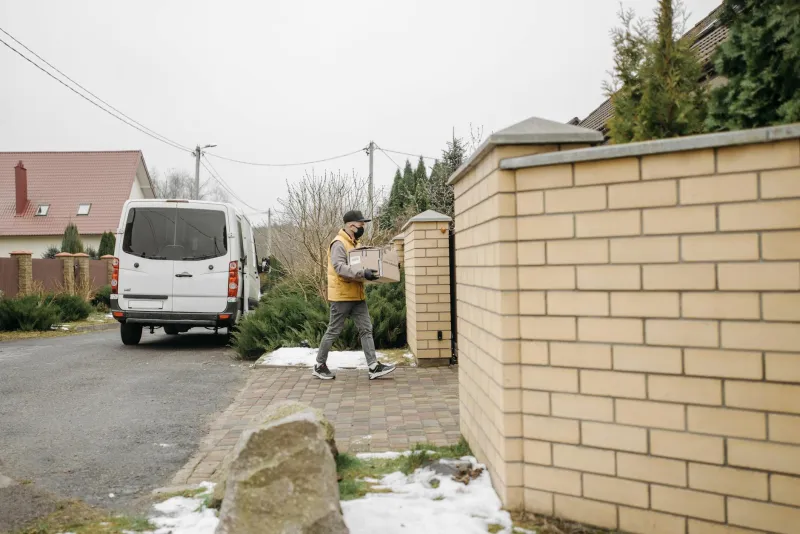
The 5 AM Ritual America Forgot
Every morning before sunrise, while most of America slept, thousands of white trucks rolled through suburban neighborhoods with the quiet efficiency of a well-oiled machine. The milkman—always in a crisp uniform, always punctual, always trusted with a key to your life—would appear at your doorstep like clockwork.
He knew Mrs. Johnson preferred whole milk on Tuesdays but switched to skim on Fridays. He remembered that the Smiths went through an extra quart when the grandkids visited. And when the Andersons went on vacation, he'd hold their delivery without being asked—because that's what neighbors did for each other, even when one of them happened to be running a business.
Today, we order groceries through apps from drivers we'll never see again. But for the better part of a century, home milk delivery represented something entirely different: commerce built on genuine human connection.
More Than Milk: The Original Subscription Service
The American milk route peaked in the 1950s, when roughly 30% of all milk consumed was delivered directly to homes. This wasn't just about convenience—it was about trust on a scale that seems almost naive by modern standards.
Families would leave empty glass bottles on their front steps, sometimes with handwritten notes tucked inside: "Please bring extra cream this week—Johnny's birthday party is Saturday." The milkman would read these personal requests, fulfill them without question, and often leave his own notes in return: "Congratulations on the new baby! Here's a complimentary pint of chocolate milk for the big brother."
No contracts. No credit card authorizations. No identity verification. Just a handshake agreement that lasted decades, passed down from father to son on both sides of the transaction.
The Economics of Trust
What made the milk route possible was an economic structure that prioritized relationships over efficiency. Milk companies employed thousands of route drivers, each responsible for maybe 200-300 customers in a tight geographic area. These weren't gig workers—they were career employees with health benefits, pensions, and genuine investment in their communities.
The milkman knew your family's schedule because his livelihood depended on it. He'd arrive after you left for work but before the kids got up for school. He understood that the elderly widow on Maple Street needed her delivery brought inside during winter, and that the young mother on Oak Avenue always left payment in the milk box on Fridays.
This intimacy wasn't accidental—it was the entire business model. Customer retention rates for milk routes often exceeded 90%, not because switching was difficult, but because switching meant losing a relationship that had become woven into daily life.
When Convenience Killed Connection
The decline of home milk delivery began in the 1960s, accelerated by suburban sprawl, the rise of supermarkets, and changing work patterns. As more women entered the workforce, fewer families were home to receive deliveries. As cars became universal, grocery shopping became a weekly expedition rather than a daily necessity.
But the final blow wasn't economic—it was cultural. Americans began prioritizing convenience and cost over relationship and service. Why pay premium prices for home-delivered milk when you could buy it cheaper at the grocery store? Why maintain a weekly relationship with a milkman when you could grab what you needed on your own schedule?
By 1975, home milk delivery had virtually disappeared from American life. The last major milk route in most cities shut down sometime in the 1980s, taking with it not just a service, but an entire way of thinking about commerce.
What We Traded Away
Today's grocery delivery promises everything the milkman offered: convenience, reliability, and products brought directly to your door. But something fundamental got lost in translation.
Modern delivery drivers are managed by algorithms, not relationships. They're optimized for efficiency, not familiarity. They know your address and your order history, but they don't know that your daughter just started college or that your husband is recovering from surgery.
The milkman represented a business model where success was measured not just in transactions, but in trust accumulated over time. He was part of a local economy where businesses succeeded by becoming indispensable to their communities, not by scaling to serve millions of anonymous customers.
The Route That Led Nowhere
When Americans abandoned the milk route, we gained undeniable benefits: lower prices, more choices, greater flexibility. But we also lost something that's proven surprisingly difficult to recreate: the experience of being known as more than just a customer.
The milkman's route wasn't just about delivering dairy products—it was about maintaining connections that made neighborhoods feel like communities. In our rush toward convenience and efficiency, we forgot that sometimes the most valuable thing a business can offer isn't just what it sells, but how it makes you feel when you buy it.
Every morning, millions of Americans wake up to packages left by strangers who disappear before dawn. It's remarkably similar to the milk route, except for the one thing that made it matter: the person behind the delivery actually knew who lived behind the door.