When a Blue-Collar Paycheck Could Buy Four Wheels: How America's Car Dream Turned Into a Payment Prison
The Golden Age of Automotive Democracy
Picture this: It's 1972, and Joe Martinez clocks out of his shift at the Ford River Rouge plant in Dearborn. He's been saving for eight months, and today he's walking into the dealership across town to buy a brand-new Mustang. Not lease. Not finance for 84 months. Buy. With cash he earned building cars just like the one he's about to drive home.
This wasn't a fantasy—it was Tuesday afternoon in America.
In 1970, the average new car cost $3,542. The median household income was $8,734. That meant a typical family could buy a new car with about five months of their annual income. For a well-paid factory worker making $10,000 a year? Three months' wages would get you off the lot with keys in hand.
Compare that to today's reality: The average new vehicle costs $47,000. The median household income is $70,000. That same purchase now requires eight months of total household income—and that's before taxes, living expenses, or the reality that most families can't actually save their entire paycheck.
When Cars Were Simple Enough to Understand
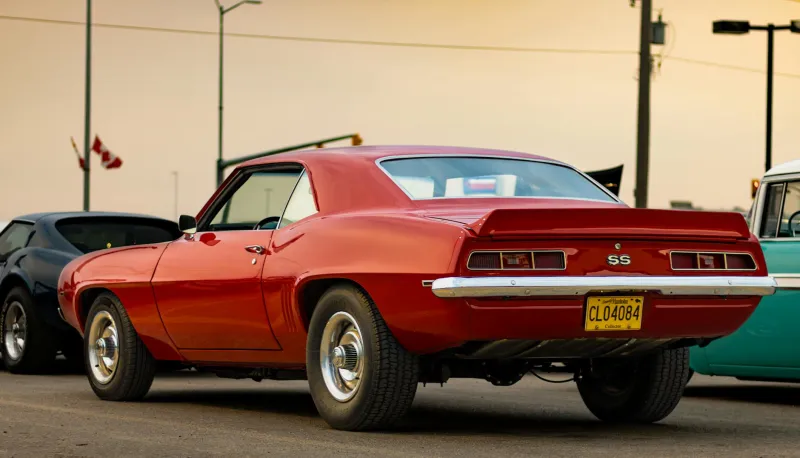
But the sticker price was only half the story. The cars Joe and his neighbors drove home were mechanical marvels they could actually comprehend. Pop the hood of a 1972 Camaro, and you'd find an engine you could see, touch, and fix with basic tools.
Carburetor acting up? Fifteen minutes with a screwdriver. Alternator died? Swap it out in the driveway. Brake pads worn down? Saturday morning project with your kid learning how things work.
These weren't stripped-down economy cars, either. A base-model Chevelle came with a V8 engine, bench seats that could fit three adults, and a trunk big enough for a family vacation. Air conditioning was an option, but everything else you needed was standard.
The average car from this era lasted 100,000 miles with basic maintenance—oil changes, tune-ups, and the occasional weekend repair session. Owners expected to keep their vehicles for seven to ten years, not because they were trapped in payments, but because the cars kept running.
The Financing Revolution That Changed Everything
Somewhere in the 1980s, the car industry discovered something revolutionary: people would pay more for a car if you didn't make them pay all at once.
Auto loans existed before, but they were typically three-year deals for people who couldn't save up the cash. By the 1990s, financing became the default option. Five-year loans became standard. Then six years. Now, 84-month loans—seven full years—are common.
The monthly payment became the only number that mattered. Dealers stopped asking "How much can you afford for a car?" and started asking "What monthly payment works for you?"
This shift allowed manufacturers to raise prices faster than wages grew, knowing buyers would focus on the monthly nut instead of the total cost. A $47,000 car sounds expensive, but $650 a month? That sounds manageable—until you realize you're paying for seven years.
The Complexity Trap
Modern vehicles are undeniably better in almost every measurable way. They're safer, more efficient, more reliable, and packed with features that would have seemed like science fiction in 1972. Anti-lock brakes, airbags, backup cameras, and engines that routinely deliver 200,000+ miles.
But this progress came with a hidden cost: the death of DIY car ownership.
Today's vehicles are computers on wheels. The average car has more processing power than the Apollo 11 spacecraft. When something goes wrong, you can't grab a wrench and figure it out. You need diagnostic equipment, specialized tools, and increasingly, software updates that only authorized dealers can perform.
The shade-tree mechanic who could keep a family's transportation running for decades has been replaced by the monthly service appointment and the dreaded check-engine light that requires a $150 diagnostic fee just to identify the problem.
The New American Car Story
Today's typical car buying experience would be unrecognizable to Joe Martinez. Walk into a dealership, and you'll spend more time discussing financing options than the actual vehicle. Extended warranties, gap insurance, maintenance packages—a simple car purchase has become a complex financial product.
The average American now has a car payment that consumes 10-15% of their take-home income. Many families carry two car loans simultaneously, often owing more than their vehicles are worth thanks to rapid depreciation and long loan terms.
We've created a system where transportation—a basic necessity for most Americans—requires a decade-long financial commitment that many can barely afford.
The Price of Progress
None of this is to say that cars were better in 1972. Modern vehicles are safer, cleaner, and more reliable than anything from the muscle car era. A 2024 Honda Civic will outlast three 1970s cars while using half the fuel and producing a fraction of the emissions.
But somewhere along the way, we lost something important: the idea that a working person should be able to own reliable transportation without signing away years of their financial future.
The family sedan went from being democracy on wheels—accessible to anyone willing to work for it—to a luxury item wrapped in affordable monthly payments. We made better cars, but we also made car ownership into a form of economic bondage that previous generations would have found incomprehensible.
In chasing the perfect vehicle, we accidentally created the imperfect payment.