Built to Last: When Your Family Car Was a Twenty-Year Investment
The Driveway That Never Changed
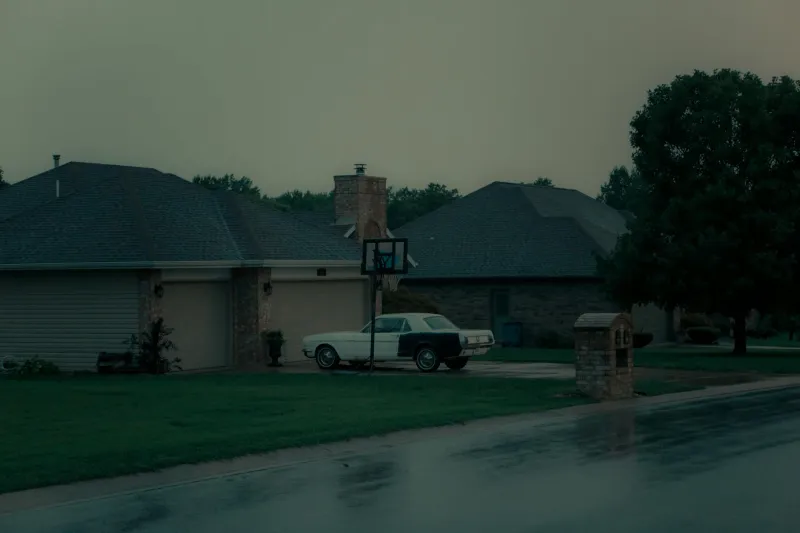
Drive through any American suburb in 1978, and you'd see the same Ford Granada sitting in the same driveway year after year. The Johnson family bought it new in 1975, and barring a major catastrophe, they planned to drive it until the wheels fell off—literally. By 1985, that Granada had 180,000 miles on it and was still running strong, maintained by Eddie at the Texaco station who knew every squeak and rattle by heart.
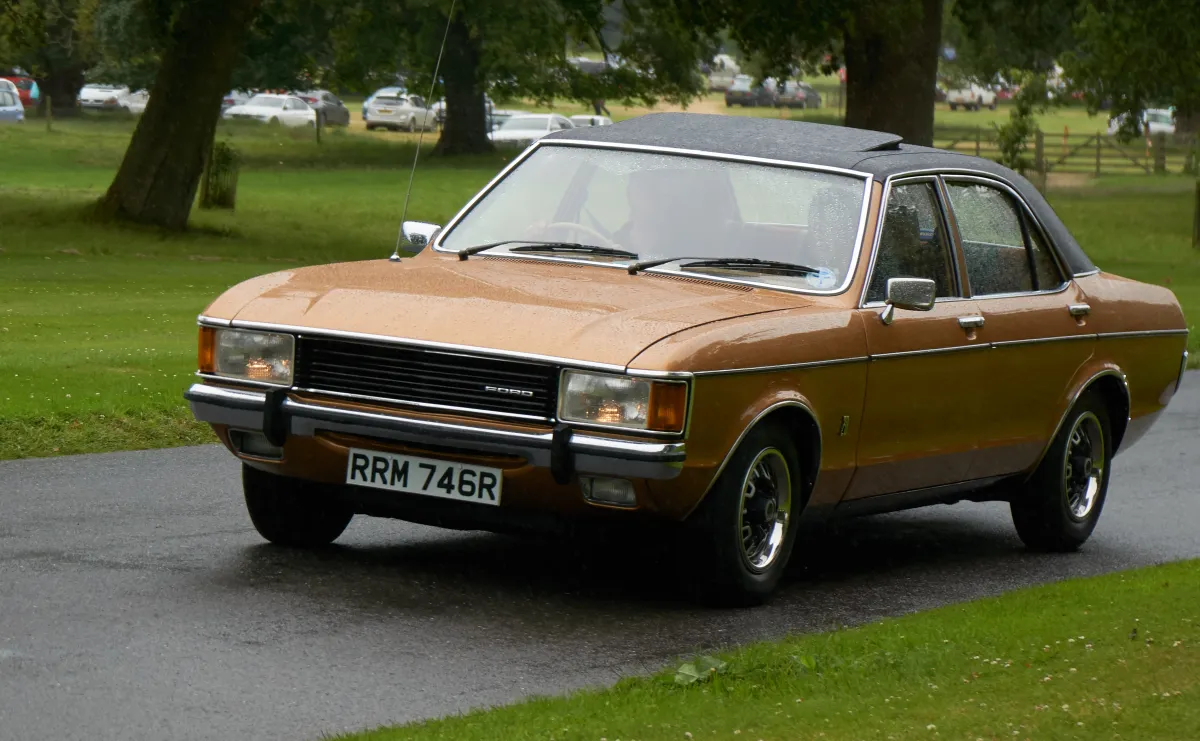 Photo: Ford Granada, via jooinn.com
Drive through that same neighborhood today, and you'll see a parade of three-year-old SUVs with temporary tags, leased crossovers returned every 36 months, and financed pickups traded in before the loan is paid off. The average American now replaces their vehicle every 4.2 years, trapped in an endless cycle of monthly payments that have become as permanent as a mortgage.
When Cars Were Investments, Not Expenses
For most of the 20th century, buying a car was a major family decision approached with the same gravity as purchasing a home. Families saved for months or years to afford the down payment, then planned to drive that vehicle for the next decade or two. The car wasn't just transportation—it was a long-term relationship.
This wasn't romanticized thinking; it was economic reality. Cars were simpler machines that could be maintained indefinitely with basic mechanical knowledge. Your local mechanic could fix anything that broke, and parts were readily available for vehicles that stayed in production for years with minimal changes.
The 1973 Chevy Impala looked almost identical to the 1978 model because manufacturers focused on perfecting existing designs rather than creating planned obsolescence. A carburetor was a carburetor, a transmission was a transmission, and both could be rebuilt multiple times over a car's lifespan.
The Mechanic Who Knew Your Engine
Every neighborhood had its Eddie—the mechanic who could diagnose problems by sound alone and had been working on the same families' cars for decades. These weren't just service providers; they were automotive family doctors who knew the history of every vehicle they touched.
Eddie knew that Mrs. Peterson's Buick needed its transmission fluid changed every 30,000 miles religiously, and that the Thompson family's station wagon had a quirky starter that required a specific technique on cold mornings. This institutional knowledge kept cars running long past what modern drivers would consider their expiration date.
The relationship between car owner and mechanic was built on trust and continuity. You didn't shop around for the cheapest oil change; you went to the person who understood your vehicle's personality. This system incentivized mechanics to build lasting relationships rather than maximize per-visit revenue.
When 100,000 Miles Was Just Getting Started
Reaching 100,000 miles on the odometer used to be a milestone worth celebrating, not a signal to start shopping for replacement. Families would gather around to watch the numbers roll over, then confidently plan for another 100,000 miles of service. Cars routinely reached 200,000 or 300,000 miles with proper maintenance, and many were passed down to teenage children as their first vehicles.
The high-mileage car wasn't seen as a liability—it was proof of smart buying and careful maintenance. A well-maintained older vehicle with documentation of regular service was often more valuable than a newer car with an unknown history.
The Subscription Model Takes Over
The transformation began in the 1990s as manufacturers discovered the profitability of keeping customers in permanent payment cycles. Leasing, once primarily a business tool, was repackaged as a consumer lifestyle choice. "Why buy when you can drive something new every few years?"
Car loans stretched from three years to five, then six, then seven years, making monthly payments seem more affordable while ensuring buyers remained underwater on their loans. The moment you drove off the lot, you owed more than the car was worth, making it financially difficult to escape the payment cycle.
Manufacturers began designing vehicles with planned obsolescence built in. Complex computer systems replaced simple mechanical components. Specialized tools and proprietary diagnostic equipment made independent repairs difficult or impossible. The neighborhood mechanic couldn't compete with dealership service departments that had exclusive access to parts and software.
The Death of the Driveway Mechanic
Modern vehicles are marvels of engineering, but they've become too complex for the average person to maintain. Where a 1970s car owner might change their own oil, replace spark plugs, and adjust their carburetor on a Saturday afternoon, today's drivers need specialized equipment just to reset the oil change indicator.
The skills that once passed from father to son—basic automotive maintenance and repair—became irrelevant as cars evolved into computers on wheels. YouTube tutorials can't replace the institutional knowledge that neighborhood mechanics accumulated over decades of working on the same vehicles.
The True Cost of Always Being New
Today's average car payment of $700 per month means Americans spend more on transportation than previous generations spent on housing. The promise of reliability through newness has proven false—modern vehicles may be more sophisticated, but they're not necessarily more dependable than the simpler machines they replaced.
The environmental cost is staggering. Where a single car once served a family for twenty years, we now manufacture millions of vehicles annually to feed the replacement cycle. The most environmentally friendly car is often the one already in your driveway, regardless of its fuel efficiency.
What We Traded Away
The shift from ownership to perpetual payments reflects broader changes in American consumer culture. We've traded the satisfaction of truly owning something for the convenience of always having something new. We've exchanged relationships with local businesses for transactions with corporate entities.
Most significantly, we've lost the peace of mind that comes with driving a paid-off vehicle. Previous generations experienced the joy of making that final car payment and driving payment-free for years. Today's drivers rarely experience that freedom, moving directly from one payment book to the next.
The old system wasn't perfect—cars broke down more frequently and lacked modern safety features. But they offered something today's vehicles can't: the genuine possibility of transportation independence. When your car was truly yours, paid for and maintained by people you trusted, the road ahead looked different.
In our rush toward innovation and convenience, we may have driven past something valuable: the simple satisfaction of a machine that worked, year after year, asking nothing more than basic care and respect.