The Road Trip That Could Kill You: How Crossing America Went From a Death-Defying Expedition to a Weekend Plan
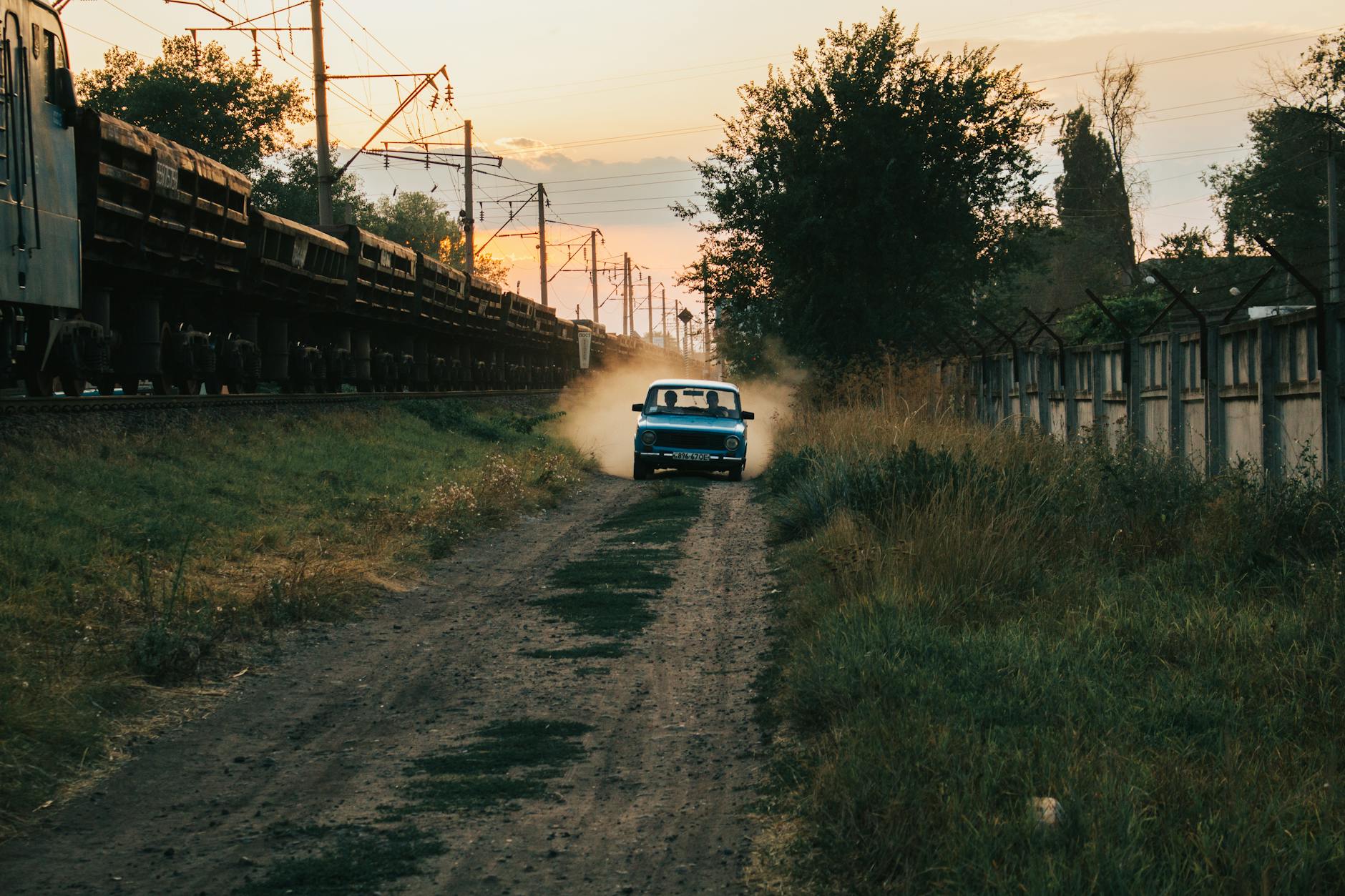
The Road Trip That Could Kill You: How Crossing America Went From a Death-Defying Expedition to a Weekend Plan
Pull up Google Maps, type in Los Angeles, and your phone will cheerfully inform you that New York is about 40 hours of driving away. Spread that over five or six days, stop at a few diners, maybe catch a sunset in Oklahoma, and you've got yourself a classic American road trip. Easy. Almost effortless.
Now try to imagine doing that same journey in 1910. No interstate. No GPS. No gas station every fifteen miles. Just you, a machine that required a hand crank to start, and a continent that was not remotely ready for you.
The difference between those two realities is one of the most dramatic transformations in American life — and most people have almost no idea how wild the old version actually was.
What Passing Through America Used to Actually Mean
In the early 1900s, the automobile was brand new and the roads were ancient. Most routes between cities were little more than dirt tracks, originally carved out for horses and wagons. When it rained — and it rained — those tracks turned to mud so thick that wheels sank to their axles. Drivers routinely had to be pulled out by local farmers, who quickly realized they could charge for the service.
The first documented coast-to-coast car trip happened in 1903, when Horatio Nelson Jackson drove from San Francisco to New York in 63 days. Sixty-three days. And he was celebrated as a hero for pulling it off. His car broke down repeatedly. He got lost constantly. He drove across open fields when the roads became impassable. At one point, he had to buy a dog in Idaho — named Bud, who wore goggles — just for company on the emptiness of the route.
By the 1920s, things had improved slightly. A loose network of named routes, like the famous Lincoln Highway, gave drivers at least a general sense of direction. But "highway" was a generous term. Large sections were still unpaved. Maps were unreliable. Bridges that could handle a horse-drawn cart weren't always built for a two-ton automobile. Travelers were advised to carry spare parts, tools, extra fuel, and enough food to survive a multi-day breakdown in the middle of nowhere.
A cross-country trip in that era typically took three to four weeks — if everything went reasonably well.
The Moment Everything Changed
The turning point has a specific name and a specific date: the Federal Aid Highway Act of 1956, signed by President Dwight D. Eisenhower.
Eisenhower had actually crossed the country by military convoy in 1919, a grueling two-month journey that left a lasting impression on him. He'd also seen Germany's autobahn system during World War II and understood what a modern highway network could do — not just for commerce, but for national defense. His vision was the Interstate Highway System: 41,000 miles of standardized, high-speed roads connecting every major American city.
It took decades to build and cost more than $500 billion in today's dollars. But it fundamentally rewired the country.
By the 1970s, you could drive coast to coast on smooth pavement, with consistent signage, predictable rest stops, and a gas station rarely more than a few miles away. A journey that had once taken months now took less than a week. The American road trip, as a cultural institution, was born.
Before and After: The Numbers Tell the Story
The contrast is almost hard to process when you line it up directly.
- 1910: New York to Los Angeles — estimated 60 to 90 days, depending on conditions. Unpaved roads for the majority of the route. No standardized signage. Fuel availability unreliable west of the Mississippi.
- 1960: New York to Los Angeles — approximately 10 to 14 days on a mix of early highways and older routes. Conditions vastly improved but still inconsistent.
- Today: New York to Los Angeles — roughly 40 driving hours. Realistically achievable in four to five days at a comfortable pace, with thousands of fuel stops, hotels, and restaurants along the way.
The car itself changed too, of course. Early automobiles had top speeds of around 30 mph and required constant mechanical attention. Modern vehicles cruise at 75 mph and can cover 400 miles on a single tank without complaint.
What We Gained — And What We Quietly Lost
The interstate made America smaller, in the best possible sense. It connected rural communities to cities, opened up the West to mass tourism, and gave ordinary Americans a freedom of movement that was genuinely revolutionary. The family road trip became a rite of passage. Route 66 became a myth. The open road became a symbol of something.
But there's a version of that story worth sitting with, too.
The early cross-country travelers weren't just getting from A to B. They were genuinely exploring. Every mile was uncertain. Every town was a discovery. The journey itself was the point, because the journey demanded everything you had.
Today, the interstate is a miracle of engineering and a masterpiece of efficiency — and it can also feel like a long, featureless corridor between places. Mile after mile of identical off-ramps, chain restaurants, and the same gas station brands repeated endlessly. The adventure has been optimized out of the experience.
That's not a criticism, exactly. Convenience is genuinely valuable. Nobody misses axle-deep mud or three-week delays. But it's worth acknowledging that something changed when crossing America stopped being an ordeal and became a plan.
The road is still out there. It's just a lot easier to take it for granted now.