The Aisle Was America's Main Street: How Grocery Shopping Lost Its Soul to Speed
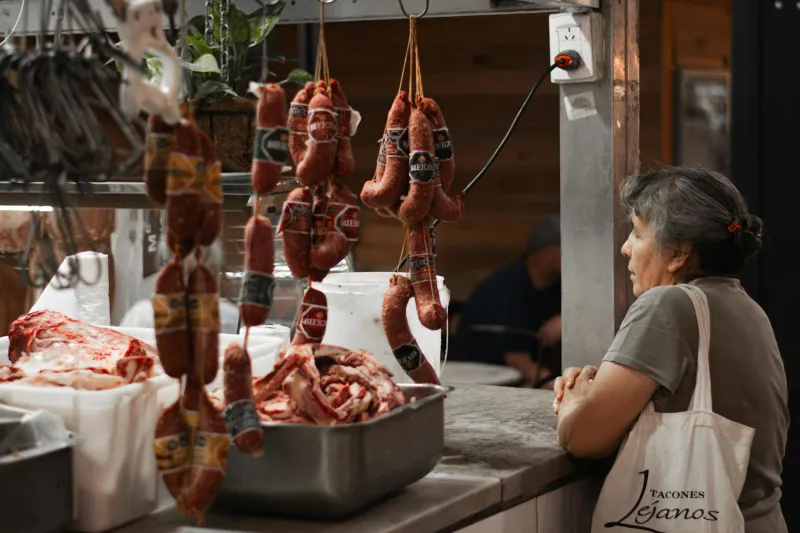
When Shopping Was a Social Event
Every Thursday afternoon, Margaret would walk three blocks to Kowalski's Market, the same route she'd taken for fifteen years. The butcher, Frank, would see her coming through the window and start wrapping her usual — two pounds of ground chuck, thick-cut bacon, and whatever roast looked good that week. By the time she reached the counter, he'd have her order ready and a story about his grandson's baseball team.
This wasn't exceptional customer service. This was just Thursday.
For most of American history, grocery shopping was a neighborhood ritual that happened at human speed. You knew the people who sold you food, and they knew you. The weekly trip to the market was as much about community connection as it was about filling the pantry.
Today, that world feels like something from a museum exhibit.
The Neighborhood Grocer Knew Your Name
In the 1960s and 70s, most Americans shopped at independently owned grocery stores that served specific neighborhoods. These weren't just businesses — they were community anchors. The owner might live above the store or around the corner. His kids went to school with your kids. When your family went on vacation, he'd hold your mail.
The butcher didn't just cut meat; he was a culinary advisor who knew your family's preferences and budget. Need something special for Sunday dinner but not sure what? He'd walk you through the options, explain the cuts, maybe suggest a preparation method his wife used. The produce manager knew which customers liked their bananas green and which preferred them spotted.
Cashiers weren't temporary workers cycling through on their way to something else. They were fixtures who remembered that Mrs. Johnson always forgot to bring her reading glasses and needed help checking prices, or that the Thompson family was trying to stick to their budget and appreciated a heads-up when hamburger meat went on sale.
Shopping Was Part of the Weekly Rhythm
The grocery trip had its own unhurried pace. You'd run into neighbors in the cereal aisle and catch up on local news. Kids would beg for candy at the checkout while parents chatted with other families. The store was where you learned about community events, heard about job openings, or found out who was having a baby.
Shopping lists were handwritten on whatever paper was handy — the back of an envelope, a napkin, sometimes just mental notes. You'd discover things you didn't know you needed by walking the aisles and seeing what looked good. Impulse purchases weren't driven by algorithmic suggestions but by seasonal displays and the grocer's recommendations.
The whole experience took time, but that time felt productive in ways that had nothing to do with efficiency.
Enter the Supermarket Revolution
By the 1980s, massive supermarket chains began swallowing up neighborhood stores. The promise was simple: lower prices, bigger selection, one-stop shopping. Why visit three different stores when you could get everything under one enormous roof?
The trade-off seemed reasonable at the time. Sure, you might not know the cashier's name, but you could buy groceries, fill a prescription, and rent a movie in the same trip. The savings were real, and American families were feeling the squeeze of economic changes that made every dollar count.
But something subtly shifted. Shopping became less about relationships and more about transactions. The butcher became a guy behind a counter who sliced whatever was in the case. The produce section turned into a warehouse of perfectly uniform fruits and vegetables that looked great but often tasted like nothing.
The Algorithm Knows What You Want
Today's grocery experience would be unrecognizable to someone from 1975. Self-checkout lanes eliminate human interaction entirely. Mobile apps track your purchase history and suggest items before you even realize you need them. Grocery delivery services promise to handle the whole ordeal for you — no human contact required.
Instacart shoppers, armed with your digital list, race through aisles grabbing items as quickly as possible. They don't know that you prefer your bananas slightly green or that you usually splurge on the good ice cream when you've had a rough week. They're optimizing for speed, not satisfaction.
Curbside pickup and grocery delivery have turned food shopping into a logistics problem to be solved rather than an experience to be enjoyed. You place an order on your phone, and food appears. It's undeniably convenient, but it's also completely disconnected from the human relationships that once made grocery shopping feel like participating in a community.
What We Gained and What We Lost
The efficiency gains are undeniable. Modern grocery shopping saves time and often money. You can order groceries while sitting in a meeting, compare prices across multiple stores without leaving your house, and avoid the frustration of crowded aisles and long checkout lines.
But we've traded away something that's harder to quantify. The neighborhood grocery store was where you learned about your community, where relationships formed over shared experiences, where shopping was part of the social fabric that held neighborhoods together.
Frank the butcher didn't just sell meat — he was a keeper of culinary knowledge, a friendly face in your routine, a connection point in your community. The cashier who knew your name wasn't just providing customer service — she was acknowledging your place in the neighborhood ecosystem.
The Speed of Modern Life
Perhaps the real shift isn't in grocery stores themselves but in how we think about time. The weekly grocery trip used to be part of the rhythm of American life, like Sunday dinners or Saturday morning cartoons. It was time that felt well-spent even when nothing particularly productive happened.
Now, any time that isn't optimized feels wasteful. Standing in line is dead time to be eliminated. Chatting with the cashier is inefficient when you could be checking emails. The grocery store became another item on an endless to-do list rather than a place where community happened.
We solved the logistics problem of feeding ourselves, but we may have lost something essential about what it means to be neighbors. The aisle used to be America's main street. Now it's just the fastest route between the entrance and the exit.