The Butcher Shop Is Gone. And We Lost Something We Didn't Know We Needed.
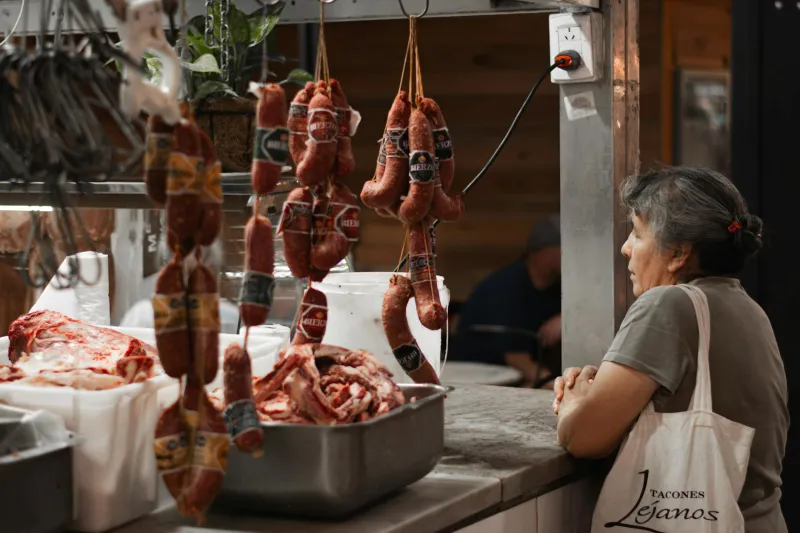
The Butcher You Actually Knew
In 1960, nearly every neighborhood in America had one. A butcher shop. Not a supermarket's meat counter—an actual, standalone shop with sawdust on the floor and a man behind the counter who understood meat the way a sommelier understands wine.
You'd walk in, and the butcher would recognize you. He'd know your family. He'd ask about your mother's preferences. Did she like her roasts lean? Was your father a steak man or a pot roast man? He'd remember. He'd remember what you bought last time. He'd remember if you were cooking for a special occasion.
When you asked for a cut, he didn't hand you a pre-packaged portion from a cooler. He went to the back, selected a section of meat, and broke it down in front of you. You watched him work. You learned something just by being there. You saw the whole animal—or at least, you understood that the meat came from an animal, that it had structure, that different parts served different purposes.
If you wanted something specific—a particular thickness, a specific amount of fat, a cut he didn't have on display—he'd work with you. He'd trim it to your specifications. He'd offer advice. He'd suggest something better if he thought you were making a mistake.
There was a relationship there. A transaction, yes, but also a connection. The butcher had a stake in your satisfaction. You'd be back. He wanted you to be happy. He wanted to know that the steak he sold you turned out well.
This wasn't unique or special. It was normal. It was how most Americans bought meat.
The Supermarket Revolution
The transformation happened in stages, but the inflection point was the rise of the supermarket and, specifically, the shift to pre-packaged meat.
Shrink-wrapped packages changed everything. Meat that came in a package, labeled with a price per pound, required no interaction. No conversation. No relationship. You picked it up, you paid, you left. The transaction was efficient. Impersonal. Clean.
For consumers, this seemed like an obvious improvement. Lower prices. Convenience. No need to make a special trip to a specialty shop. Just grab meat while you're buying milk and bread.
For the butcher, it was a death sentence. Why go to a specialty shop when the supermarket has meat? Why pay a premium for personalized service when you can get the same product cheaper, right there in the same place you're buying everything else?
The butcher shops didn't disappear overnight. But they faded. One by one, across the country, the neighborhood butcher closed down. The skilled tradesmen—men who had spent years learning their craft—left the profession. Young people stopped apprenticing as butchers because there was no future in it.
By the 1990s, the neighborhood butcher was already becoming a memory. By the 2010s, finding an actual butcher in many American towns became nearly impossible.
What Actually Disappeared
It's easy to romanticize the past. But something genuine was lost when the butcher shop closed.
First, there's the obvious: knowledge. A butcher understood meat. He understood how to select for quality. How to recognize a good cut. How to break down an animal efficiently. How to identify problems—spoilage, disease, poor quality. When you bought from a butcher, you were benefiting from his expertise.
When you buy shrink-wrapped meat from a supermarket, you're buying blind. You're trusting the label. You're trusting the packaging. You're hoping the person who wrapped it knew what they were doing. Often, they don't. Many supermarket meat departments are staffed by people with minimal training and no particular investment in quality.
Second, there's accountability. A butcher's reputation was tied to the quality of his meat. If he sold you bad meat, you'd know. You'd come back and tell him. He'd lose your business. That created an incentive to be careful, to be honest, to care about what he sold.
With supermarket meat, accountability is diffused. If the meat is bad, you blame the supermarket. The supermarket blames the distributor. The distributor blames the processor. No one person is responsible. No one person cares whether you come back.
Third, there's the knowledge of origin. A butcher often knew where his meat came from. He had relationships with local farms or regional distributors. He could tell you something about the animal. Where it was raised. How it was fed. What to expect from the cut.
Supermarket meat is a mystery. It comes from somewhere. It was processed somewhere. It traveled through a supply chain so complex that no single person understands it. The label tells you almost nothing about the actual animal.
The Disconnection
The deeper loss is philosophical. When you buy meat from a supermarket, you're not really buying meat. You're buying a product. The connection between the meat and the animal has been severed.
Most Americans, if you asked them to think about it, understand intellectually that meat comes from animals. But they don't feel it. They don't see it. They don't have to acknowledge it.
When you bought from a butcher, you couldn't avoid that reality. You saw the cuts. You understood that this was once a living creature. It created a certain respect. A certain consciousness about what you were eating and where it came from.
Today, meat is just another product. Indistinguishable from any other commodity. Infinitely replaceable. Infinitely forgettable.
The Small Comeback
There's something interesting happening now. In pockets across America, butcher shops are coming back.
Not everywhere. Not most places. But in cities, in affluent neighborhoods, in communities that have the wealth to support specialty food retail, butchers are re-opening. People are seeking them out. They're willing to pay more for meat from someone who knows what they're doing.
It's revealing. It suggests that what was lost wasn't just convenience or price efficiency. It was something people actually valued. The relationship. The expertise. The sense that someone cared whether you were satisfied.
These new butcher shops are often positioned as artisanal, premium, special. They're not. They're just normal butcher shops, doing what butcher shops have always done. The fact that they seem special now—that they're noteworthy enough to be written about in magazines—tells you how far we've fallen.
Most Americans will never have access to a good butcher. And for many of those who do, it will cost them two or three times what they pay at the supermarket.
What was once universal and affordable has become a luxury item. And we've collectively accepted that this is normal. That this is progress.