The Guy Down the Block Could Fix Your Transmission: How America's Neighborhood Repair Culture Vanished
The Guy Down the Block Could Fix Your Transmission: How America's Neighborhood Repair Culture Vanished
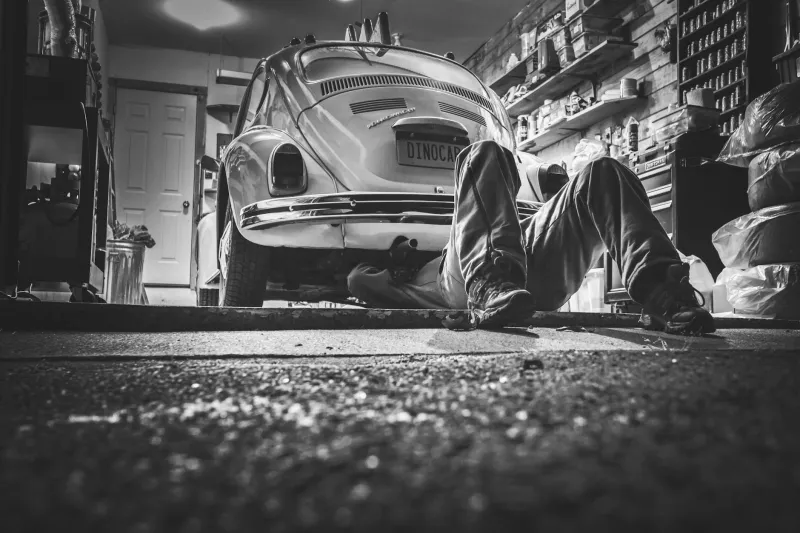
Every street had one. Maybe it was Bob from three houses down, who could listen to your engine knock and tell you exactly which bearing was going bad. Or Mrs. Peterson next door, who somehow knew how to coax another year out of your washing machine with a paperclip and some electrical tape. Perhaps it was the retired machinist at the end of the block, whose garage overflowed with salvaged parts and whose hands could fix anything from lawn mowers to furnaces.
These neighborhood fixers weren't professionals in the modern sense. They didn't have certifications hanging on their walls or liability insurance policies. What they had was something far more valuable: decades of accumulated knowledge, the patience to figure things out, and a culture that celebrated repair over replacement.
When Every Garage Was a Workshop
In the 1950s and 60s, American neighborhoods operated on an informal economy of mutual assistance. The guy who could rebuild carburetors might trade his skills for help with plumbing. The woman who could resurrect any household appliance might exchange her expertise for lawn care or snow removal.
This wasn't just about saving money, though that was certainly part of it. Cars were simpler then – you could actually see the engine components and understand how they worked together. Appliances were built to last and designed to be repaired. Most importantly, the culture encouraged tinkering. Taking something apart to see how it worked wasn't seen as risky behavior; it was how people learned.
Neighborhoods buzzed with the sounds of productivity: the whir of drill presses in basement workshops, the clanging of hammers in backyard sheds, the satisfied grunt of an engine turning over after a weekend of patient troubleshooting. Knowledge flowed freely between generations, with grandfathers teaching grandsons the mysteries of points and condensers, and neighbors sharing hard-won wisdom about everything from brake adjustments to furnace maintenance.
The Rise of the Certified Technician
Today's repair landscape looks completely different. That helpful neighbor has been replaced by certified technicians working out of dealerships and authorized service centers. Your car's computer requires proprietary diagnostic equipment that costs more than most people's annual salary. Your appliances are sealed units with warnings that opening them will void the warranty.
The transformation didn't happen overnight. It began in the 1970s and accelerated through the following decades as products became more complex and liability concerns grew. Manufacturers discovered they could increase profits by controlling the repair process. Why sell a $50 part when you can charge $500 for installation and diagnostics?
Meanwhile, insurance companies and lawyers created a culture where informal help became legally risky. The neighbor who once gladly looked at your transmission now worries about being sued if something goes wrong. The informal apprenticeships that once passed knowledge from generation to generation were replaced by formal certification programs that cost thousands of dollars and require ongoing education.
The Death of Mechanical Intuition
Perhaps the most significant loss isn't economic – it's educational. The neighborhood repair culture taught people how things actually worked. Children grew up understanding that mechanical problems had logical causes and solutions. They learned patience, problem-solving, and the satisfaction of fixing rather than discarding.
Today's products are deliberately designed to discourage repair. Smartphones are sealed with proprietary screws. Car hoods open to reveal plastic covers hiding the actual engine components. Appliances use custom parts that aren't available to consumers. Even when repairs are technically possible, the cost often approaches that of replacement.
This shift has created a generation that's largely mechanically illiterate. The average American can navigate complex software but can't change their own oil. They can troubleshoot network connectivity issues but panic when a toilet runs continuously. The hands-on knowledge that once defined American self-reliance has been systematically eliminated.
What We Lost When We Gained Convenience
The professionalization of repair brought undeniable benefits. Today's technicians are better trained and have access to superior tools and information. Modern diagnostic equipment can identify problems that would have stumped the most experienced neighborhood mechanic. Safety standards are higher, and the risk of dangerous DIY electrical work has decreased.
But something essential was lost in the translation. The neighborhood repair culture wasn't just about fixing things – it was about community connection, knowledge sharing, and the deep satisfaction of solving problems with your own hands. It taught resourcefulness and created bonds between neighbors who might otherwise never interact.
The economic impact extends beyond individual households. Communities that once kept money circulating locally through informal repair networks now send that money to distant corporate service centers. The retired machinist who once supplemented his pension by fixing neighbors' lawnmowers now watches from his window as they pay hundreds of dollars for repairs he could have done for twenty.
The Quiet Revolution of Helplessness
Today's service economy promises convenience but delivers dependence. We've traded the uncertainty of neighborhood expertise for the reliability of professional service – and paid for it with both money and self-sufficiency. The result is a culture where people feel helpless when faced with mechanical problems, even simple ones.
The guy down the block who could fix your transmission is gone, replaced by appointment-only service centers and diagnostic fees that start at $150. In gaining professional reliability, America lost something harder to quantify but equally valuable: the knowledge that most problems have solutions, and that those solutions are often within reach of ordinary people willing to learn and try.
That loss reverberates through communities in ways we're only beginning to understand. When neighbors stop helping each other solve problems, they stop being neighbors in any meaningful sense. The informal networks that once made American communities resilient have been replaced by formal systems that are efficient but impersonal.
The mechanic who lived on your street didn't just fix things. He fixed the idea that regular people could understand and control their physical world. His disappearance marks more than the end of an era – it signals the quiet surrender of a fundamental American belief in individual capability and community cooperation.