Sunburned, Muddy, and Home by Dark: The Vanishing World of the Unsupervised American Kid
Sunburned, Muddy, and Home by Dark: The Vanishing World of the Unsupervised American Kid
Somewhere in a shoebox in your parents' attic, there's probably a photograph of a kid — maybe you, maybe a sibling — standing at the edge of a creek with muddy knees and a grin that suggests absolutely no adult was nearby when whatever happened, happened. That photo is almost a historical document now. Not because creeks disappeared. Because the kid standing alone at the edge of one largely did.
The transformation in how America raises its children over the past half-century is one of the most dramatic cultural shifts hiding in plain sight. It didn't happen overnight. It crept in gradually, dressed up as safety and love and good parenting — and by the time most people noticed, the free-range childhood that defined generations had already become something close to a relic.
What a Summer Actually Looked Like in 1978
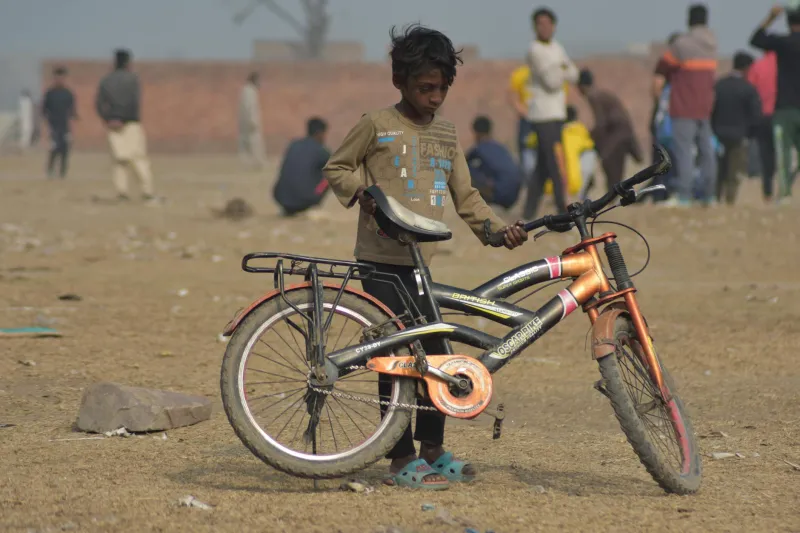
If you grew up in the 1970s or early 1980s, the rhythm of summer was simple: you left the house in the morning, and you came back when the streetlights flickered on. No check-ins, no scheduled playdates, no GPS location shared with an anxious parent. You roamed. You negotiated. You got into minor trouble and figured your way out of it without adult intervention.
Kids walked to school alone from remarkably young ages — six, seven, eight years old — navigating intersections, weather, and the occasional neighborhood dog without a parent in tow. Older kids took public buses across town. Summer afternoons were spent in woods, empty lots, and backyards that belonged to whoever showed up that day. Boredom was considered your problem to solve, not a scheduling failure on your parents' part.
This wasn't neglect. It was the default. It was how childhood had functioned, in various forms, for generations. The expectation was that children were resilient, adaptable creatures who needed space to figure the world out — and that hovering over them constantly was neither practical nor particularly desirable.
The Slow Tightening of the Leash
So when did it change? Pinpointing a single moment is impossible, but a few forces converged in the 1980s and 1990s that fundamentally rewired American parenting culture.
High-profile child abduction cases — particularly the disappearance of Etan Patz in 1979 and Adam Walsh in 1981 — generated enormous media coverage and lodged a specific, visceral fear into the national consciousness. Milk cartons started carrying missing children's photos. "Stranger danger" became a genuine curriculum in elementary schools. The message was clear: the world outside your door was full of predators, and your child was a potential victim.
The data, then and now, tells a more complicated story. Child abduction by strangers is — and was — extraordinarily rare. According to the National Center for Missing and Exploited Children, the vast majority of missing children cases involve family abductions or runaways, not the predatory stranger scenario that dominates parental anxiety. Violent crime against children actually peaked in the early 1990s and has declined significantly since. By most measurable metrics, American children are safer today than they were in 1975.
But perception and reality parted ways a long time ago.
Scheduled Into Childhood
What replaced unstructured freedom wasn't nothing — it was structure. Organized sports, music lessons, tutoring sessions, supervised playdates, enrichment camps. The modern middle-class childhood is, in many ways, an extraordinarily full one. Calendars that would exhaust a corporate executive are considered normal for a ten-year-old.
This shift carries real consequences. Researchers studying child development — including psychologist Peter Gray, whose work on free play has been widely cited — argue that the decline of unsupervised play has contributed to rising rates of anxiety, depression, and diminished problem-solving ability in young people. The logic is straightforward: children learn to manage risk by encountering it. When every environment is pre-screened and every conflict is adult-mediated, those developmental muscles don't get built.
There's also a class dimension that rarely gets discussed openly. The helicopter parenting model — intensive scheduling, constant supervision, enrichment at every turn — is largely a phenomenon of middle and upper-middle-class families. Working-class and lower-income families often still rely on older siblings, neighbors, and yes, some degree of independence simply because the economics of constant supervision don't work. The result is a strange cultural inversion where unsupervised childhood, once universal, is now either a marker of poverty or a conscious, almost countercultural choice made by parents who've read enough developmental psychology to push back against the dominant trend.
The Legal Dimension Nobody Talks About
There's another layer to this that rarely surfaces in nostalgic conversations about childhood: liability. The legal and institutional environment surrounding children has shifted in ways that actively punish the kind of independence that was once unremarkable.
Parents have faced calls to child protective services — and in some cases, actual investigations — for letting children walk to a park alone or stay home briefly without supervision. Schools have tightened policies around what kids can do during recess. Playgrounds have been redesigned to eliminate anything that involves genuine physical risk, producing the rubberized, low-platform structures that offer approximately zero of the physical challenge that older playground equipment provided.
A handful of states — Utah, Oklahoma, and Texas among them — have passed so-called "free-range parenting" laws in recent years, explicitly protecting parents' rights to allow children reasonable independence without facing legal consequences. The fact that such laws needed to be written at all says something about how far the pendulum has swung.
What We Actually Lost
None of this is an argument for indifference. Kids do need supervision. There are genuine risks in the world. But there's a meaningful difference between reasonable caution and the near-total elimination of childhood autonomy that has quietly become the American norm.
What got lost isn't just muddy knees and sunburns. It's the experience of navigating small failures, resolving disputes without a referee, and building a sense of competence that comes only from operating independently in the world. The kid who spent a summer figuring out how to build a raft out of scrap wood and float it on a drainage ditch wasn't just having fun. They were learning something that no structured enrichment program can fully replicate.
The world didn't become dramatically more dangerous. Our tolerance for uncertainty did. And somewhere in that shift, a particular kind of childhood — loud, unsupervised, and gloriously unscheduled — quietly slipped away.