The Last of the Tool Whisperers: How America Lost Its Fix-Anything Gurus
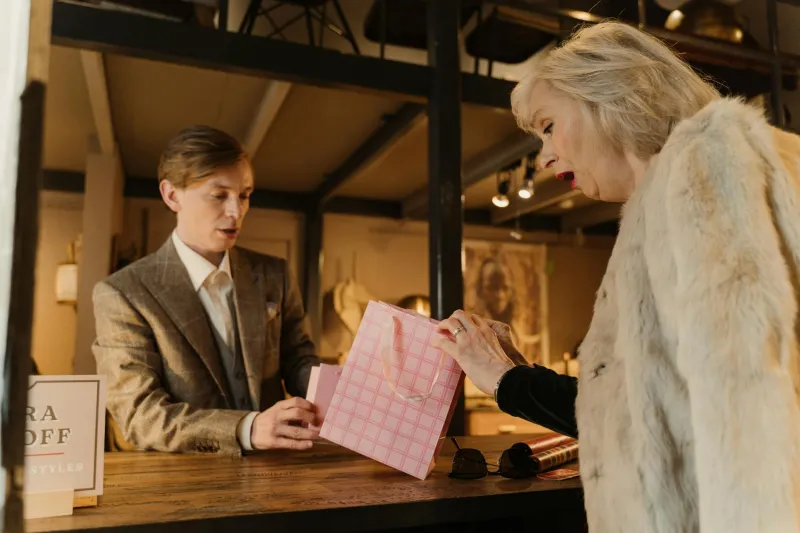
The Oracle Behind the Counter
There was a time when walking into Kowalski's Hardware meant walking into a consultation room. The bell above the door would chime, and before you'd even figured out how to explain your problem, Eddie behind the counter was already reaching for exactly what you needed.
"Got a drip that won't quit?" you'd start.
"Kitchen or bathroom?" Eddie would ask, not even looking up from organizing washers.
"Kitchen."
"Under the sink or from the faucet?"
"Faucet."
"Hot or cold side?"
Three questions in, and Eddie was walking you to aisle two, pulling a 79-cent O-ring from a drawer that looked like it hadn't been organized since the Eisenhower administration. Five minutes later, you were walking out with the exact part, installation instructions that actually made sense, and usually a story about how Mrs. Patterson down on Elm Street had the same problem last week.
This wasn't just retail. This was neighborhood-level problem solving, dispensed by people who had spent decades watching the same houses develop the same issues, season after season.
The Encyclopedia of Everything Broken
The old-school hardware store employee wasn't just selling products—they were walking encyclopedias of residential failure. They knew that houses built in the 1960s had different plumbing than houses built in the 1980s. They knew which paint would stick to your particular brand of siding and which would peel off by Christmas. They knew that when you said your door "sticks a little," you probably meant it hadn't closed properly since Carter was president.
These weren't college kids earning beer money or retirees looking for something to do. These were career problem-solvers who had chosen to spend their working lives becoming experts in the thousand small ways that American homes break down and how to fix them.
Bill Henderson ran Henderson Hardware in Springfield, Illinois, for forty-three years. By the time he sold the business in 1998, he could identify most problems before customers finished describing them. "You get to know the houses in your neighborhood," he explained. "You know that the Craftsman bungalows on Oak Street all have the same foundation settling issue. You know that anybody who bought one of those ranch houses they built in '74 is going to have problems with their sliding doors."
This was institutional knowledge built customer by customer, problem by problem, over decades.
When Shopping Became Searching
Walk into a Home Depot or Lowe's today, and you're entering a different universe entirely. Forty thousand square feet of products, organized with corporate efficiency and staffed by employees who might know where the screws are located but probably can't tell you which ones will work for your specific project.
The business model changed everything. The big-box stores won on selection and price, but they lost something that couldn't be quantified on a spreadsheet: expertise. When you're running a store with 150 employees across multiple shifts, you can't have forty-three years of neighborhood knowledge behind every counter.
Instead, you get aisles. Lots of them. And the assumption that customers can figure it out themselves.
The result? Americans spend more time in hardware stores than they used to, wandering aisles with their phones out, trying to Google their way to solutions that a single conversation used to provide. We've traded expertise for selection, knowledge for square footage.
The YouTube University Problem
Today's home repair culture has shifted from asking someone who knows to asking the internet. YouTube has become America's hardware store, filled with tutorials that range from genuinely helpful to genuinely dangerous.
But here's what YouTube can't do: it can't look at your specific situation and adjust the advice accordingly. It can't tell you that the standard solution won't work in your 1950s Cape Cod because of how they ran the electrical back then. It can't warn you that your particular brand of water heater has a quirk that's going to make the "simple" repair significantly more complicated.
The old hardware store guys could. They'd seen your exact problem in your exact type of house, probably multiple times.
What We Lost in the Translation
The death of the neighborhood hardware store represents something bigger than just a shift in retail. It's the loss of local expertise, of institutional knowledge that was built up over generations and passed down through apprenticeship and experience.
We gained convenience and selection. We can buy anything we need, often cheaper than before, and we can do it at 9 PM on a Sunday if we want to.
But we lost the guy who knew exactly what we needed before we did. We lost the consultation that came free with every purchase. We lost the confidence that came from knowing that someone with four decades of experience had looked at our problem and handed us the right solution.
In the end, we traded the tool whisperers for self-checkout machines. We can buy more stuff than ever before. We just have no idea if it's the right stuff.
The hardware store guys didn't just sell solutions. They were solutions. And once they were gone, no amount of aisle space could replace what we'd lost.