When Your TV Broke, Someone Actually Fixed It: The Death of America's Repair Culture
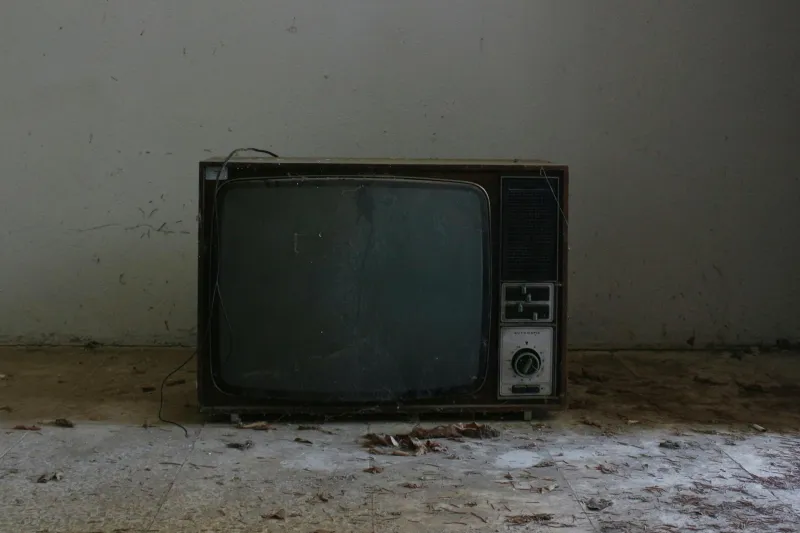
The Man with the Toolbox
Every neighborhood had one—the TV repairman who could diagnose a flickering screen over the phone and show up at your door with a station wagon full of replacement parts. These weren't just service calls; they were house visits from craftsmen who understood the intricate electronics that families had saved months to afford.
In 1965, the average television set cost about $400—roughly $3,800 in today's money. When something that expensive broke down, you didn't throw it away. You called someone who could fix it, and you waited patiently while they worked their magic with soldering irons and oscilloscopes.
The TV repairman was part detective, part surgeon. He'd arrive with a toolbox that looked like a small laboratory, filled with vacuum tubes, capacitors, and testing equipment that could isolate problems down to individual components. Most importantly, he possessed something increasingly rare in today's world: the knowledge and tools to make things work again.
When Electronics Were Built to Last
The televisions these repairmen serviced were fundamentally different machines than today's flat screens. They were built with discrete components that could be individually diagnosed and replaced. A blown tube, a failing capacitor, or a loose connection were specific problems with specific solutions.
These sets were designed with repair in mind. Circuit boards were spacious enough for human hands to work on. Components were labeled clearly and connected with accessible wiring. Manufacturers published detailed service manuals because they expected their products to be serviced rather than replaced.
The economics made sense for everyone involved. Consumers protected their significant investment by maintaining it properly. Repairmen built sustainable businesses around their specialized knowledge. Manufacturers sold fewer units but built stronger relationships with customers who kept their products for decades.
The House Call Economy
TV repair was part of a broader service economy that operated on fundamentally different principles than today's retail culture. The repairman didn't just fix your television—he maintained an ongoing relationship with your family's electronics.
He knew the quirks of your particular model, the environmental factors in your home that might affect performance, and the usage patterns that determined which components were likely to fail next. This wasn't just technical knowledge; it was intimate familiarity with how technology fit into people's daily lives.
The house call itself was a ritual that reinforced the value of both the appliance and the expertise required to maintain it. The repairman would spread newspapers on your living room floor, carefully remove the back panel of your console television, and begin the methodical process of diagnosis and repair while your family watched.
The Disposable Revolution
Today's 55-inch smart TV costs less than $400—a fraction of what families once paid for much smaller screens. This dramatic price reduction has fundamentally altered the relationship between consumers and their electronics. When replacement costs less than repair, the economic incentive to fix anything disappears.
Modern electronics are designed for manufacturing efficiency rather than repairability. Components are miniaturized, integrated, and often impossible to service without specialized equipment that costs more than the device itself. The circuit boards that once accommodated human intervention are now dense networks of microscopic connections that require machine precision to modify.
Even when repair is technically possible, the economics rarely make sense. Finding someone with the skills to diagnose and fix a modern television often costs more than buying a new one, especially when you factor in the inconvenience of being without your primary entertainment device.
The Environmental Cost of Convenience
This shift from repair to replacement has created an electronic waste crisis that would have been unimaginable to the TV repairman generation. Americans now discard approximately 6.9 billion pounds of electronic waste annually, much of it from devices that could theoretically be repaired but aren't economically worth fixing.
The environmental impact extends beyond just the waste stream. Manufacturing new electronics requires significant energy and raw materials, while the old repair economy maximized the useful life of products that had already been produced. The TV that lasted twenty years with periodic maintenance has been replaced by devices with planned obsolescence built into their design.
Yet most consumers don't experience this as an environmental choice—they experience it as technological progress. Today's televisions are lighter, more energy-efficient, and offer capabilities that would have seemed like science fiction to previous generations. The trade-off between repairability and advancement isn't always obvious.
The Skills We Lost
The disappearance of the TV repairman represents more than just a business model that became obsolete. It represents the loss of a particular type of knowledge and a way of relating to the objects in our lives.
These repairmen understood technology at a fundamental level. They could trace electrical problems through complex circuits, identify failing components by subtle changes in performance, and restore functionality using basic tools and deep knowledge. This expertise was built through years of hands-on experience with devices that were complex enough to be interesting but simple enough to be comprehensible.
Today's electronics are simultaneously more sophisticated and more opaque. The average smartphone contains more computing power than room-sized computers from the repair era, but its functionality is largely inaccessible to individual understanding or intervention.
What We Gained and What We Lost
The modern electronics ecosystem has delivered remarkable benefits. Devices are more reliable, more capable, and more affordable than ever before. The inconvenience of waiting for repairs and the expense of maintaining aging equipment have largely disappeared.
But we've also lost something valuable: the idea that the things we own are worth preserving and that the skills to maintain them are worth developing. The TV repairman represented a culture that valued durability, understood craftsmanship, and saw waste as a problem to be solved rather than a byproduct to be managed.
This shift reflects broader changes in American culture—from ownership to access, from maintenance to replacement, from local expertise to global manufacturing. Whether this represents progress or loss depends on how you value convenience versus sustainability, innovation versus durability, and efficiency versus the satisfaction of making things work again.