When Americans Knew How to Sit Still: The Lost Ritual of Doing Absolutely Nothing
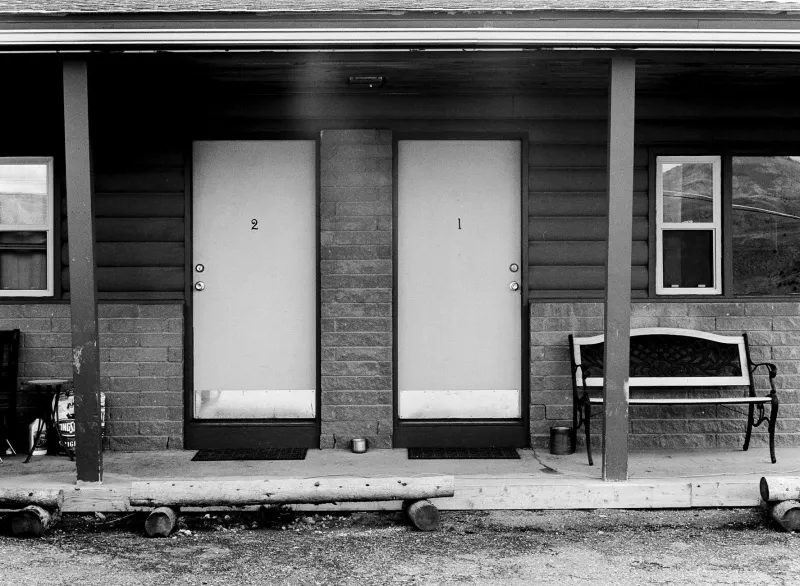
The Porch That Time Forgot
Every summer evening in 1955, millions of Americans performed the same ritual. They walked outside, settled into a chair on their front porch or back steps, and did absolutely nothing. No radio, no television, no magazine. Just sitting, watching the world go by, letting their minds wander wherever they pleased.
Today, that same scene would trigger immediate anxiety. Within minutes, most people would reach for their phone, desperate to fill the uncomfortable void of unstimulated consciousness. We've become a nation that has forgotten how to be bored — and the cost may be steeper than we realize.
When Empty Time Was Just Time
In the decades before personal entertainment became portable and infinite, Americans had a fundamentally different relationship with mental downtime. Waiting for a bus meant staring at the street. Standing in line at the bank meant studying the ceiling tiles or striking up conversations with strangers. Long car rides involved looking out windows and letting thoughts drift.
This wasn't considered a problem to be solved. It was simply life.
Children especially lived in vast oceans of unstructured time. Summer afternoons stretched endlessly, filled with the particular restlessness that comes from having nothing specific to do. Kids would lie in the grass, watch clouds, or sit on curbs picking at pavement cracks — activities that would now be immediately interrupted by a parent handing over a tablet.
"I'm bored" wasn't a crisis requiring immediate intervention. It was the starting point of imagination.
The Neuroscience of Nothing
Modern brain research has revealed what our grandparents intuitively understood: unstimulated minds aren't idle minds. When we're not actively focused on a task, our brains shift into what neuroscientists call the "default mode network" — a state where different regions communicate in ways that foster creativity, self-reflection, and memory consolidation.
This is when we process experiences, make unexpected connections between ideas, and engage in the kind of deep thinking that can't happen when we're constantly consuming information. It's the mental equivalent of defragmenting a hard drive.
But the default mode network needs genuine quiet to function. The brief moments between checking social media don't count. Neither does listening to podcasts while walking or having background TV while cooking. True boredom requires sustained periods of understimulation — something that's become almost extinct in American life.
The Anxiety of the Empty Moment
Somewhere between the introduction of the Walkman and the arrival of the smartphone, Americans developed what researchers call "nomophobia" — the fear of being without mobile phone contact. But it's deeper than that. We've developed a fear of being alone with our own thoughts.
A 2014 University of Virginia study found that people would rather give themselves electric shocks than sit quietly in a room for 15 minutes with nothing to do. The researchers were stunned. Participants chose physical pain over mental stillness.
This represents a complete reversal from earlier American culture, where the ability to be comfortable in solitude was considered a mark of maturity and wisdom. Thoreau's cabin at Walden Pond wasn't seen as a punishment — it was an aspiration.
What We Lost When We Filled Every Second
The elimination of boredom from American life coincided with several concerning trends. Anxiety rates among young people have skyrocketed. Attention spans have measurably shortened. The ability to engage in sustained, focused thinking has declined.
Meanwhile, the creative industries increasingly struggle to find original ideas. When every moment is filled with input, there's no space for the kind of mental wandering that generates novel thoughts. The great American innovations of the past often emerged from people who had time to think — really think — without distraction.
Consider how many breakthrough ideas historically came to people during unstimulated moments: in the shower, on long walks, or while staring out train windows. These "aha" moments require mental space that constant connectivity has largely eliminated.
The Paradox of Infinite Entertainment
We now have access to more entertainment than any generation in human history. Every song ever recorded, every movie ever made, every book ever written — all available instantly. Yet surveys consistently show that Americans feel more restless and dissatisfied than previous generations.
The reason might be that true satisfaction requires contrast. Without periods of genuine quiet, constant stimulation becomes background noise. Without boredom, entertainment loses its power to truly engage us. We've created a culture where nothing feels special because everything is always available.
The Path Back to Stillness
Some Americans are beginning to recognize what we've lost. Digital detox retreats are booming. Meditation apps paradoxically use technology to teach people how to disconnect from technology. "Slow living" movements encourage people to rediscover the art of doing less.
But individual solutions can only go so far in addressing what's become a cultural shift. The challenge isn't just personal — it's structural. Modern life is designed to eliminate empty moments, from the screens in elevators to the constant notifications that ensure we're never truly alone with our thoughts.
Reclaiming the Right to Be Bored
The Americans who knew how to sit still possessed something we're only beginning to understand we've lost: the ability to exist comfortably in their own consciousness. They could tolerate uncertainty, sit with difficult emotions, and let their minds process experiences at their own pace.
This wasn't a luxury — it was a fundamental life skill. And like many skills our ancestors took for granted, learning to be bored again might require the same intentional effort we once put into avoiding it.
The porch is still there. The chair is still empty. The question is whether we can remember how to fill it with nothing at all.