When Strikes Mattered More Than Strikes: How America's Bowling Revolution Quietly Rolled Away
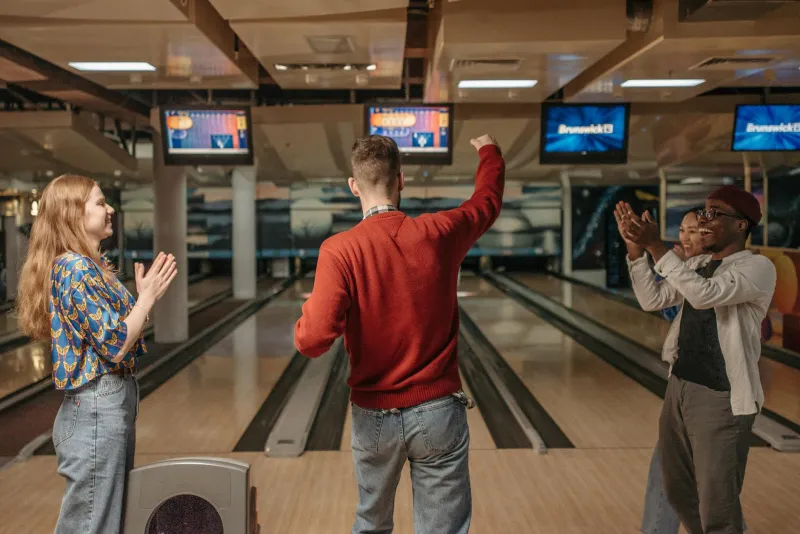
The Thunder That Echoed Through Every American Town
Walk past any strip mall today and you might notice the oddly shaped buildings with their distinctive long, narrow footprints. Chances are, you're looking at the ghost of America's bowling boom—structures that once housed the heartbeat of working-class social life, now converted into everything from furniture stores to fitness centers.
In 1963, bowling was the most popular participatory sport in America. Not watching sports—playing them. More than 11 million Americans belonged to sanctioned bowling leagues, gathering religiously every Tuesday or Thursday night to roll heavy balls down wooden lanes while drinking cheap beer and trash-talking their coworkers.
The local bowling alley wasn't just entertainment. It was democracy in action.
Where Everyone Belonged
The beauty of mid-century bowling lay in its radical inclusivity. A machinist could bowl alongside a bank manager. Teenagers saved quarters for Friday night cosmic bowling while their grandparents dominated the senior leagues on Wednesday afternoons. Women's leagues thrived—offering one of the few spaces where working mothers could socialize without kids in tow.
League bowling created natural communities. Teams had names like "The Gutter Rats" or "Strike Force Five." Players knew each other's quirks, celebrated personal bests, and showed up for each other during tough times. The alley served as an unofficial town square where neighborhood news traveled faster than local radio.
Most importantly, bowling was cheap. A night of league play cost about what you'd spend on a movie ticket today. Shoe rental was fifty cents. Beer was a dollar. For a family of four, an evening at the lanes represented affordable fun that didn't require driving to the big city.
The Slow-Motion Collapse
The decline started subtly in the 1980s. Television began offering more entertainment options. Video games captured teenage attention. Suburban sprawl moved families farther from neighborhood alleys. But the real killer was economic.
As manufacturing jobs disappeared, so did the blue-collar communities that formed bowling's backbone. League membership required consistency—showing up every week, paying dues, committing to teammates. When people started working multiple jobs or unpredictable schedules, that consistency became impossible.
Real estate values delivered the final blow. Bowling alleys needed massive footprints in increasingly expensive locations. One by one, they sold to developers who could pack more profitable businesses into the same space.
The Boutique Bowling Illusion
Today's bowling landscape tells a different story. Surviving alleys have transformed into "entertainment complexes" with laser lights, gourmet food, and craft cocktails. A night out now costs what league bowlers used to spend in a month.
These modern venues target date nights and corporate events rather than weekly leagues. The atmosphere is polished, sanitized, Instagram-ready. Gone are the scarred wooden lanes, the hand-chalked scoreboards, the regulars who knew your average and your life story.
The new bowling experience is undeniably slicker. But it's also fundamentally different—entertainment you consume rather than community you belong to.
What We Lost When the Pins Stopped Falling
The death of league bowling represents more than the decline of a sport. It marked the end of one of America's last truly egalitarian social institutions.
Modern recreation tends toward economic segregation. Yoga studios serve affluent neighborhoods. Country clubs require membership fees. Even pickup basketball has been pushed from public courts to private gyms in many areas.
Bowling once offered something rare: a space where class distinctions mattered less than whether you could pick up a 7-10 split. Factory workers bowled next to office managers. Everyone wore the same rented shoes.
The social infrastructure that bowling provided—regular face-to-face interaction, shared goals, friendly competition—has largely moved online. But digital communities, however vibrant, can't replicate the particular magic of celebrating a strike with people who smell like cigarettes and industrial soap.
The Lanes That Built America
Perhaps most significantly, bowling alleys served as informal job networks and community support systems. Players learned about openings at each other's workplaces. They lent money during hard times and celebrated promotions together. Team captains developed leadership skills. Shy kids found confidence.
These benefits weren't intentional—they were byproducts of people showing up consistently to the same place, week after week, year after year.
Today's gig economy makes such consistency nearly impossible. But we've also stopped valuing the kind of low-key, unglamorous community building that bowling represented. We want our social lives to be more dynamic, more curated, more efficient.
The question is whether we've gained more than we've lost. Modern Americans have access to infinite entertainment options and can connect with like-minded people across the globe. But we've also become a lonelier, more isolated society.
Maybe the real strike was trading the regular rhythm of league night for the endless scroll of social media feeds. The pins we knocked down were the connections that once held communities together.