When Your Pharmacist Was Your Health Confidant: The End of the Corner Drugstore Era
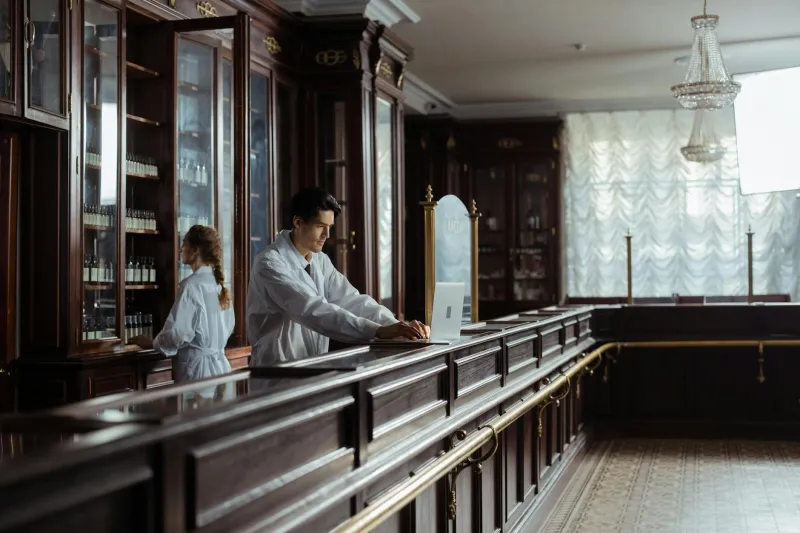
When Your Pharmacist Was Your Health Confidant: The End of the Corner Drugstore Era
Walk into any CVS or Walgreens today, and you'll find yourself in a maze of aisles filled with everything from greeting cards to frozen dinners. The pharmacy counter sits at the back, staffed by rotating technicians who might ask for your birthday twice before handing over a white paper bag. It's efficient, convenient, and completely impersonal.
But for most of the 20th century, picking up your prescription meant something entirely different.
The Neighborhood Health Guardian
In 1960, America had over 50,000 independent pharmacies. These weren't just places to fill prescriptions—they were community health centers run by pharmacists who knew three generations of your family. Harold Weinstein, who owned Miller's Pharmacy in Brooklyn for forty-three years, could tell you which of his customers were diabetic, who struggled with high blood pressure, and which teenagers were likely buying condoms for the first time.
"Mr. Miller knew my grandmother's arthritis medication better than she did," recalls Patricia Chen, now 67, about her childhood pharmacy in San Francisco's Richmond District. "When she started getting confused about her pills, he'd call our house to check on her. Try getting that kind of attention at a chain store today."
These pharmacists didn't just count pills and print labels. They compounded medications from scratch, mixing powders and liquids in the back room with mortar and pestle. They'd adjust dosages based on a patient's response, suggest alternatives when money was tight, and quietly extend credit during hard times. Most importantly, they served as an accessible bridge between patients and the increasingly complex world of modern medicine.
The Personal Touch That Mattered
The relationship between pharmacist and customer ran deeper than business transactions. Independent pharmacists often knew details that even family doctors missed—like which medications a patient actually took versus what they were prescribed, or how side effects were really affecting someone's daily life.
"My pharmacist, Mrs. Rodriguez, noticed I was refilling my asthma inhaler way too often," remembers David Thompson, describing his childhood in 1970s Phoenix. "She sat me down and figured out I wasn't using it correctly. Probably saved my parents hundreds of dollars and me a lot of breathing problems."
This wasn't unusual. Pharmacists routinely caught dangerous drug interactions, spotted signs of medication abuse, and provided informal health counseling. They knew which customers couldn't afford their full prescriptions and would quietly arrange payment plans or suggest generic alternatives years before insurance companies made it standard practice.
When Everything Changed
The shift began in the 1980s with the rise of chain pharmacies and insurance company pressure to reduce costs. Suddenly, the cozy corner drugstore faced competition from massive operations that could fill prescriptions faster and cheaper. Independent pharmacists found themselves squeezed between rising wholesale costs and insurance reimbursement rates that barely covered their expenses.
By 2000, chain pharmacies controlled over 60% of the market. Today, that number exceeds 80%, and fewer than 20,000 independent pharmacies remain nationwide. The survivors often struggle to compete with the convenience of drive-through windows, 24-hour service, and automatic refill programs that the big chains offer.
The Modern Pharmacy Experience
Today's pharmacy visits follow a predictable script. You approach a counter staffed by technicians working behind plexiglass, provide your name and birthday, and wait while someone retrieves your prescription from automated dispensing systems. The actual pharmacist—if you see one at all—might emerge briefly to explain side effects they're reading from a computer screen.
This system prioritizes efficiency and consistency. Chain pharmacies fill prescriptions faster, maintain better inventory, and offer extended hours that independent stores couldn't match. Automated systems catch drug interactions more reliably than human memory, and standardized procedures reduce the risk of dangerous errors.
But something fundamental was lost in this transformation.
What We Traded Away
"The old pharmacists were like neighborhood physicians," explains Dr. Sarah Martinez, a public health researcher who studies healthcare delivery systems. "They provided continuity of care that's almost impossible to replicate in today's fragmented system."
That continuity meant catching problems early, providing health education, and serving as trusted advisors for families navigating complex medical decisions. When your pharmacist knew you'd been taking the same blood pressure medication for fifteen years, they'd notice changes in your condition that might escape a rotating staff of strangers.
The loss extends beyond individual health outcomes. Independent pharmacies served as community gathering places where neighbors shared information and looked out for each other. Elderly customers would stop by not just for medications but for social interaction with someone who cared about their wellbeing.
The Price of Progress
Modern pharmacy chains offer undeniable advantages: lower costs, greater convenience, and technological sophistication that reduces certain types of errors. Mail-order prescriptions and automated refill systems make managing chronic conditions easier for many patients.
But we've also created a system where the person dispensing your life-sustaining medications might not recognize your face from one visit to the next. The pharmacist who once served as your family's informal health advisor has been replaced by efficiency algorithms and corporate protocols.
Some communities are trying to bridge this gap. Certain chain pharmacies now offer clinical services like vaccinations and health screenings, while independent pharmacies that survive often emphasize personalized service as their competitive advantage.
Yet the fundamental relationship—the pharmacist who knew your name, your history, and your health concerns—remains largely a memory of an era when healthcare felt more human, even if it wasn't always more efficient.
In our rush toward convenience and cost-effectiveness, we may have optimized away something that can't be measured in prescription fill times or profit margins: the irreplaceable value of being truly known by someone who cares about keeping you healthy.