When Your Doctor Knew Where You Kept the Spare Key: America's Lost Era of Medical House Calls
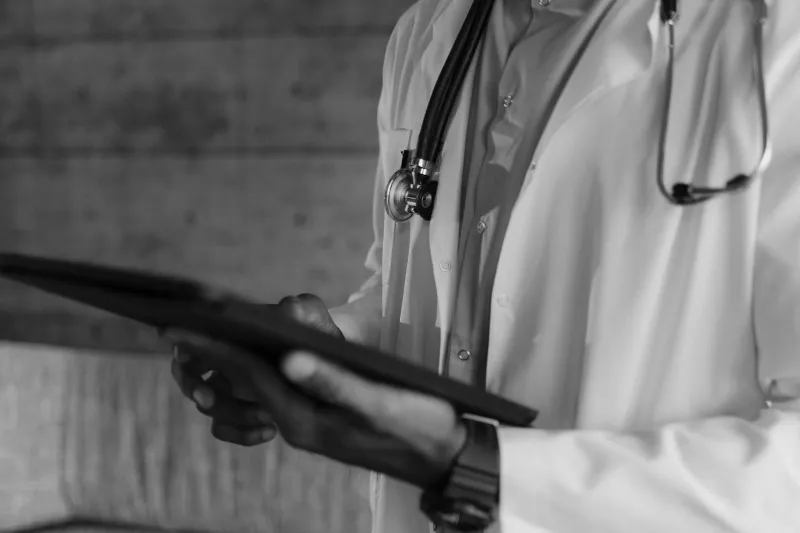
Picture this: It's 2 AM on a Tuesday in 1955. Your child has a burning fever, and you're worried. You pick up the phone, dial a number you know by heart, and within thirty minutes, Dr. Patterson is at your front door with his worn leather medical bag. He examines your child on the living room couch, gives you medicine from his bag, and leaves instructions written on a prescription pad. The bill? It gets added to your monthly account, which you settle when you can.
That world existed. And it wasn't that long ago.
The Doctor Who Came to You
For most of American history, medical care happened where people lived. Doctors didn't just make house calls—they built their entire practice around them. In 1930, about 40% of all doctor-patient encounters happened in the home. By 1950, that number had only dropped to about 10%. Today? Less than 1% of physicians make regular house calls.
Dr. William Osler, often called the father of modern medicine, famously said that medicine should be learned "by the bedside." He meant it literally. Doctors learned to diagnose by observing patients in their natural environment, noting everything from the humidity in the bedroom to the family's stress levels.
 Photo: Dr. William Osler, via www.williamoslerhs.ca
These physicians carried everything they needed in a single bag: stethoscope, thermometer, blood pressure cuff, syringes, basic medications, and even surgical instruments. They could set a broken bone on your dining room table, deliver a baby in the bedroom, and treat pneumonia without ever moving the patient.
More importantly, they knew your family. Not just your medical history, but your actual history. They knew that your husband worked double shifts at the steel plant, that your mother-in-law lived upstairs and helped with the kids, and that money was tight until payday. This context shaped their treatment decisions in ways that modern medicine has largely forgotten.
When Getting Sick Didn't Mean Getting Dressed
The house call era solved problems we didn't realize we'd created. When you were genuinely ill, you didn't have to get dressed, find transportation, sit in a waiting room full of other sick people, and then explain your symptoms to multiple strangers before seeing the actual doctor.
Instead, medical care came to you. The doctor could see how you lived, assess your home environment, and understand the practical realities of following treatment recommendations. If you were prescribed bed rest, they could evaluate whether your bedroom was suitable. If you needed to change your diet, they could see what was actually in your kitchen.
Families also had relationships with their doctors that extended beyond medical emergencies. The family physician often attended church with you, knew your children by name, and understood the economic pressures your household faced. This relationship meant that medical advice came with built-in trust and practical wisdom.
The System That Killed the House Call
So what happened? The transformation wasn't sudden, but it was systematic.
First, medical technology became too complex and expensive to carry in a bag. X-ray machines, laboratory equipment, and specialized diagnostic tools required permanent installations. Doctors needed access to these tools to provide what was increasingly considered standard care.
Second, medical education shifted toward specialization. The general practitioner who could handle everything from childbirth to broken bones became less common as medicine divided into specialized fields. Specialists needed specialized equipment, which meant centralized locations.
Third, insurance companies began standardizing payment systems around office visits and hospital procedures. House calls became financially unsustainable when insurance wouldn't reimburse them at the same rate as office visits, despite taking significantly more time.
Finally, liability concerns made house calls legally risky. Doctors worried about practicing medicine without immediate access to emergency equipment and specialist backup.
What We Built Instead
Today's medical system prioritizes efficiency and specialization over accessibility and relationships. Instead of one doctor who knows your family, you navigate a network of primary care physicians, specialists, urgent care centers, and emergency rooms.
Need medical attention? First, call your primary care doctor's office and speak to a scheduling system that might offer an appointment next week. If it's urgent, you can try urgent care, where you'll see whichever doctor happens to be working that shift. If it's really urgent, there's the emergency room, where you might wait hours to see a physician who has never met you before and will likely never see you again.
The modern system excels at complex procedures and life-saving interventions that would have been impossible in the house call era. But it struggles with basic accessibility, continuity of care, and the kind of preventive medicine that comes from actually knowing your patients' lives.
The Hidden Cost of Convenience
We gained medical miracles but lost medical relationships. We can perform heart surgery that would have been science fiction in 1955, but we struggle to provide basic primary care to people who need it most.
The house call era wasn't perfect. Doctors had limited treatment options, diagnostic capabilities were primitive, and serious conditions often went undetected until it was too late. But the system solved fundamental problems about accessibility and trust that we're still trying to figure out.
Some physicians are rediscovering house calls, particularly for elderly patients and those with chronic conditions. Concierge medicine services offer house calls for those who can afford to pay out of pocket. But these remain niche services rather than the foundation of American medical care.
The next time you sit in a waiting room, scrolling through your phone while hoping to see a doctor who might remember your name, consider what we traded away. Sometimes progress means moving forward. Sometimes it means remembering what worked and asking whether we threw out something valuable in our rush toward something newer.