He Built Half the Street and Never Signed a Thing: The Lost Era of the Contractor You Could Trust
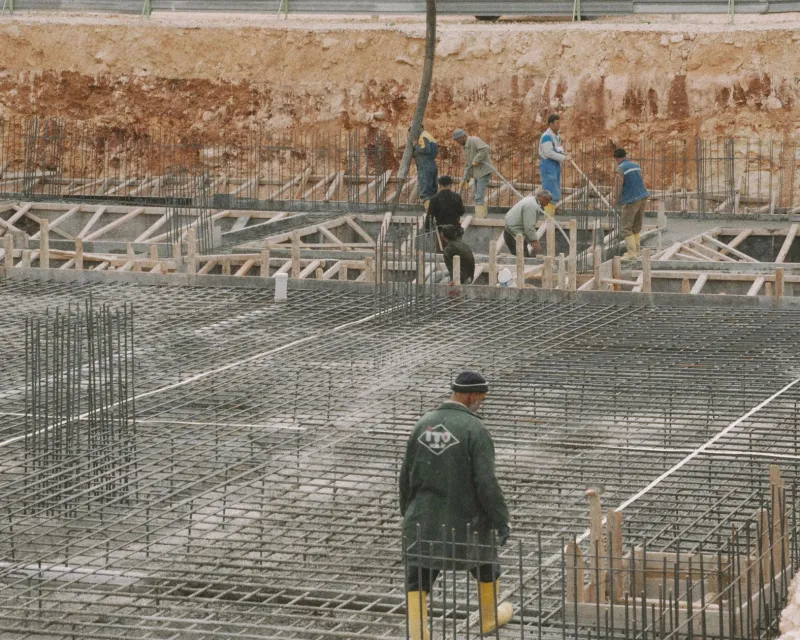
Somewhere in a mid-century suburb, a man named Sal Ferrucci built fourteen houses on the same block over the course of a decade. He didn't advertise. He didn't have a website, a license number on his truck door, or a folder full of liability waivers. What he had was a reputation so solid you could lean a wall against it. When your roof started leaking, you called Sal. When Sal said he'd be there Tuesday, he was there Tuesday.
That version of American construction — intimate, reputation-driven, and sealed with nothing more than a handshake — is largely gone now. What replaced it is more regulated, more documented, and in many ways more accountable. But something real and irreplaceable walked out the door with the old way of doing things.
The Neighborhood Was the Reference Check
Before Angie's List and Google Reviews, the most powerful marketing tool a contractor had was the block he already worked on. If your neighbor's addition held up through three winters and looked good doing it, that was all the vetting you needed. Word of mouth wasn't a marketing strategy — it was the only strategy.
This created a self-regulating system built on mutual accountability. A contractor who cut corners didn't just lose one job. He lost the entire neighborhood. In a world where your customer base was a few square miles of people who talked to each other at church, at the hardware store, and over backyard fences, your reputation was your livelihood. You couldn't hide a bad foundation behind a slick website. The work spoke for itself, and everybody heard it.
Contracts were rare. Written estimates were sometimes scrawled on the back of a receipt. The agreement was almost always verbal: here's what I'll do, here's roughly what it'll cost, and I'll stand behind it. That last part — I'll stand behind it — carried real weight in a community where everyone knew where you lived.
The Paper Trail Arrives
The shift toward formalized construction didn't happen overnight. It crept in gradually through the second half of the twentieth century, driven by population growth, urban expansion, and a building boom that pulled contractors far outside their home communities. When Sal stopped working the same six streets and started taking jobs across town — or across the state — the informal trust network broke down. He didn't know his clients anymore. They didn't know him.
Permit requirements expanded. Liability insurance became mandatory in most states. Lien laws grew more complex. And as the legal framework around construction thickened, so did the paperwork. By the time the internet arrived, the transformation was almost complete. Now you could hire someone who had never set foot in your zip code, had no connection to anyone you knew, and whose references were five-star reviews that may or may not have been written by real people.
The inspection process formalized quality control in ways that handshake culture never could. A building inspector doesn't care how charming your contractor is. The wiring either meets code or it doesn't. In that sense, the modern system is genuinely safer. Houses built today are structurally more consistent, better insulated, and more fire-resistant than their mid-century counterparts — partly because the rules demand it.
But consistency came at a cost.
When Safety Became a Line Item
Permits cost money. Inspections cost time. Insurance premiums are factored into every bid. Compliance with local building codes requires contractors to hire specialists — electricians, plumbers, HVAC technicians — each of whom carries their own licensing requirements and overhead. The result is that a bathroom renovation that Sal might have handled himself for a few hundred dollars in labor now involves four separate trades, three permits, two inspections, and a project timeline measured in months rather than weeks.
Homeowners pay for all of it. The average cost of a kitchen remodel in the United States has roughly tripled in real terms since the 1970s. Some of that is materials. A significant chunk is the administrative and legal scaffolding that now surrounds every nail and wire.
Small contractors — the guys who used to do a little of everything for the neighborhood — have largely been squeezed out. The licensing burden, the insurance requirements, and the administrative overhead favor larger operations that can absorb those costs across dozens of simultaneous jobs. The one-man shop that built your grandfather's deck for a fair price and a case of beer is an endangered species.
What the Handshake Actually Meant
It's easy to romanticize the old system and forget its real failures. There was no recourse when a contractor took your deposit and disappeared. There was no way to verify that the electrical work behind your walls was safe. Women and minority homeowners were particularly vulnerable in a trust economy that often excluded them from the informal networks that provided accountability.
The modern system fixed a lot of that. Licensing boards, bonding requirements, and written contracts give homeowners genuine legal protection that simply didn't exist before. If your contractor ghosts you today, you have options. You have documentation. You have a paper trail.
But something was lost too. The handshake wasn't just a naive substitute for legal protection. It was a social contract — a statement that two people were bound together by community, by reputation, by the knowledge that they'd see each other again at the hardware store or the Little League game. That kind of accountability was personal in a way that no contract can replicate.
Sal Ferrucci cared about your kitchen because he cared about what you thought of him, and what you thought of him mattered because you were neighbors. That's a different kind of motivation than fear of a lawsuit, and it produced a different kind of relationship.
The Version We Have Now
Today's homeowner navigates a world of contractor ratings, insurance certificates, permit applications, and change orders. It is safer and more transparent than what came before. It is also more expensive, more impersonal, and more adversarial. The assumption embedded in modern construction contracts is that the two parties might not trust each other — which is probably wise, given that they often don't know each other at all.
What we traded away was the version of community where the person fixing your roof was your neighbor, where their incentive to do good work was woven into the fabric of their daily life, and where a handshake meant something because both hands belonged to people who had to keep living in the same town.
That world had real problems. But it also had a kind of human texture that no permit process has ever managed to reproduce.