The Envelope That Actually Got You Hired: When a Handwritten Letter Could Beat a Harvard Degree
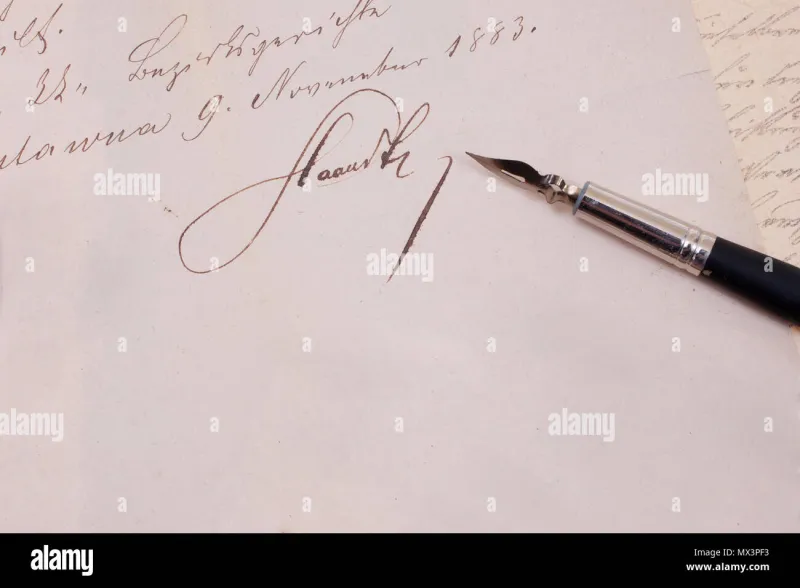
Photo: vintage handwritten job application letter desk pen 1950s, via c8.alamy.com
Somewhere in a box in an attic in Ohio or Georgia or Oregon, there is almost certainly a handwritten letter. Two or three pages, maybe. Carefully composed on lined paper, or on the good stationery someone's mother kept in the bureau drawer for important occasions. A young person explaining, in their own words and their own handwriting, why they deserved a chance.
And somewhere in the memory of American hiring, there is a manager who read that letter, set it down on his desk, and thought: I want to meet this person.
That chain of events — letter, impression, meeting, job — sounds quaint now. It was, in fact, how millions of Americans built careers for the better part of the twentieth century. And the system that replaced it, for all its efficiency and algorithmic sophistication, has quietly closed a door that used to stand wide open.
How It Actually Worked
The job application process in mid-century America was, by modern standards, strikingly informal. A young man or woman looking for work might hear about an opening through a neighbor, a church acquaintance, or a notice in the local paper. They would sit down — often at the kitchen table — and write a letter. By hand, in their best penmanship, they would introduce themselves, describe what they could offer, and ask for the opportunity to be considered.
The letter mattered in ways that went beyond its content. Neatness signaled care. Word choice suggested intelligence or determination. The physical act of sitting down to compose something formal communicated that the applicant understood this was serious. Hiring managers in that era were reading character as much as credentials.
References worked differently too. A letter from your high school principal, your pastor, or the owner of the hardware store where you'd worked summers carried genuine weight — not because these were credentialed evaluators, but because they were known quantities in a community where reputation traveled. A foreman at a factory might call the man who wrote the reference and have a five-minute conversation that told him more than any résumé could.
And then came the interview itself — often the first, last, and only filter that really mattered. You walked in. You shook hands. You looked someone in the eye and answered questions for twenty minutes. The person across the desk made a judgment based on the complete human being sitting in front of them.
Was that system perfect? Absolutely not. It had serious and well-documented problems with bias, exclusion, and the way informal networks could reinforce existing inequalities. But it also had a quality that deserves honest acknowledgment: it evaluated people as people, not as data points.
The Machine That Took Over the Door
The transformation of American hiring didn't happen in a single moment. It accumulated across decades, accelerating sharply with the digitization of the job market in the late 1990s and reaching something close to its current form in the 2010s.
Applicant tracking systems — the software platforms that now process the majority of job applications at companies of any significant size — were designed to solve a real problem. When a single job posting can attract five hundred applications in forty-eight hours, some form of automated filtering is practically necessary. Nobody disputes that.
But the filtering mechanisms these systems use have their own logic, and that logic is not neutral. Keywords. Degree requirements. Specific certifications. Employment gaps flagged as red marks. Résumés formatted incorrectly for the parser, discarded before a human eye ever reaches them.
Studies have found that a substantial percentage of qualified applicants are screened out by ATS platforms before any human involvement in the process. One widely cited analysis by Harvard Business School and Accenture estimated that millions of what they called "hidden workers" — people with real skills and genuine potential — are systematically eliminated by automated screening criteria that have little relationship to actual job performance.
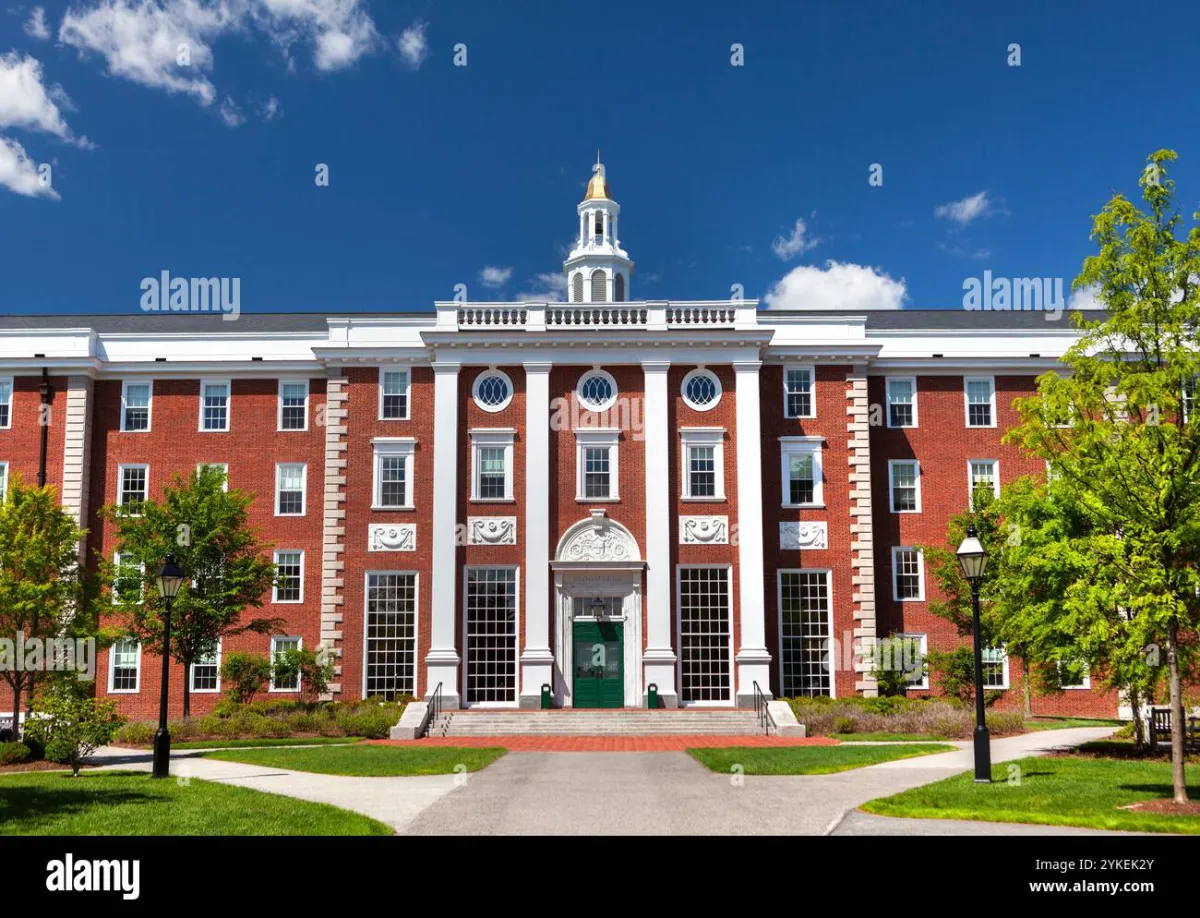 Photo: Harvard Business School, via c8.alamy.com
The young person writing at the kitchen table in 1955, choosing their words carefully, had a direct line to the person making the decision. The young person submitting an online application in 2024 is writing for an algorithm that may never pass their name to a human being at all.
What the Old System Got Right (And Why It Matters)
The handwritten application era had a particular advantage for working-class applicants that rarely gets discussed directly: it leveled the field in ways the modern system doesn't.
A person without a college degree, applying to a manufacturing firm or a retail operation or a local insurance office in 1960, could make their case entirely on the merits of how they presented themselves on paper and in person. They didn't need to have optimized their LinkedIn profile. They didn't need to know which keywords matched the job description. They didn't need a degree from a school whose name the algorithm would recognize.
They needed to write a decent letter and show up ready to work.
The personal reference system, for all its informality, also created pathways that credentialism has since closed. A kid who grew up working in his uncle's garage didn't have ASE certifications, but he had a reference from someone the hiring manager had known for twenty years. That was enough. The relationship carried the weight that the credential now has to carry — and for a lot of people, the relationship was more accessible than the credential.
The Efficiency Trap
Modern hiring is, by every measurable standard, faster and more scalable than the old model. A company can process thousands of applications in the time it once took to read a single stack of letters. Standardized screening reduces certain kinds of human inconsistency. Digital records make the process auditable in ways that a hiring manager's gut feeling never was.
But efficiency is not the same thing as effectiveness, and the American labor market has been quietly learning that distinction the hard way. Employers report persistent difficulty filling roles even during periods of high unemployment. Workers report being rejected by automated systems for jobs they were clearly qualified to perform. The mismatch is real, and it sits right at the intersection of a hiring process that has optimized for speed at the expense of judgment.
The handwritten letter was slow. The personal reference system was imperfect and uneven. The face-to-face interview as the primary filter was subject to all kinds of human bias that we have, rightly, spent decades trying to address.
But somewhere inside that old, creaky, inefficient process was something that the current system has not managed to replicate: the ability to see a person clearly enough to take a chance on them.
The envelope on the manager's desk didn't just carry a letter. It carried an argument — a human being making the case, in their own hand, that they were worth knowing.
A lot of people could make that argument. The algorithm was never designed to hear it.