The Dentist Down the Street Who Knew Your Baby Teeth: How Oral Care Became a Luxury We Used to Take for Granted
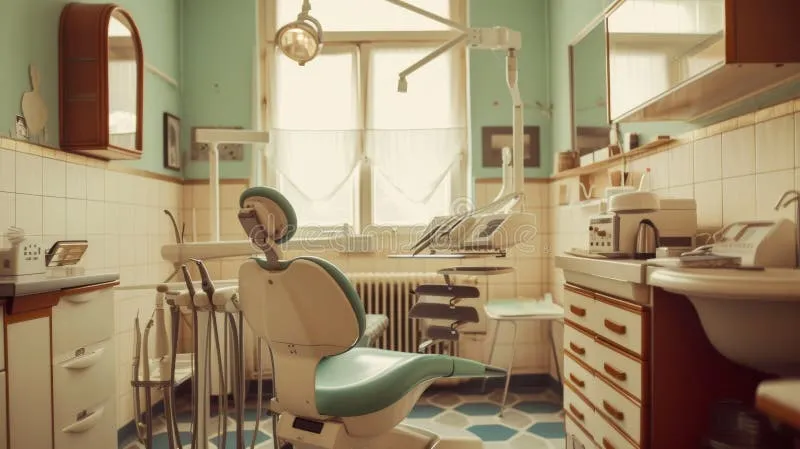
Photo: vintage 1950s dentist office waiting room retro, via thumbs.dreamstime.com
There was a dentist on practically every main street in postwar America. Not a franchise. Not a corporate wellness center with a branded app and a financing department. Just a guy — usually it was a guy — with a small waiting room, a few Norman Rockwell prints on the wall, and a receptionist who remembered your birthday because she'd been answering that same phone for fifteen years.
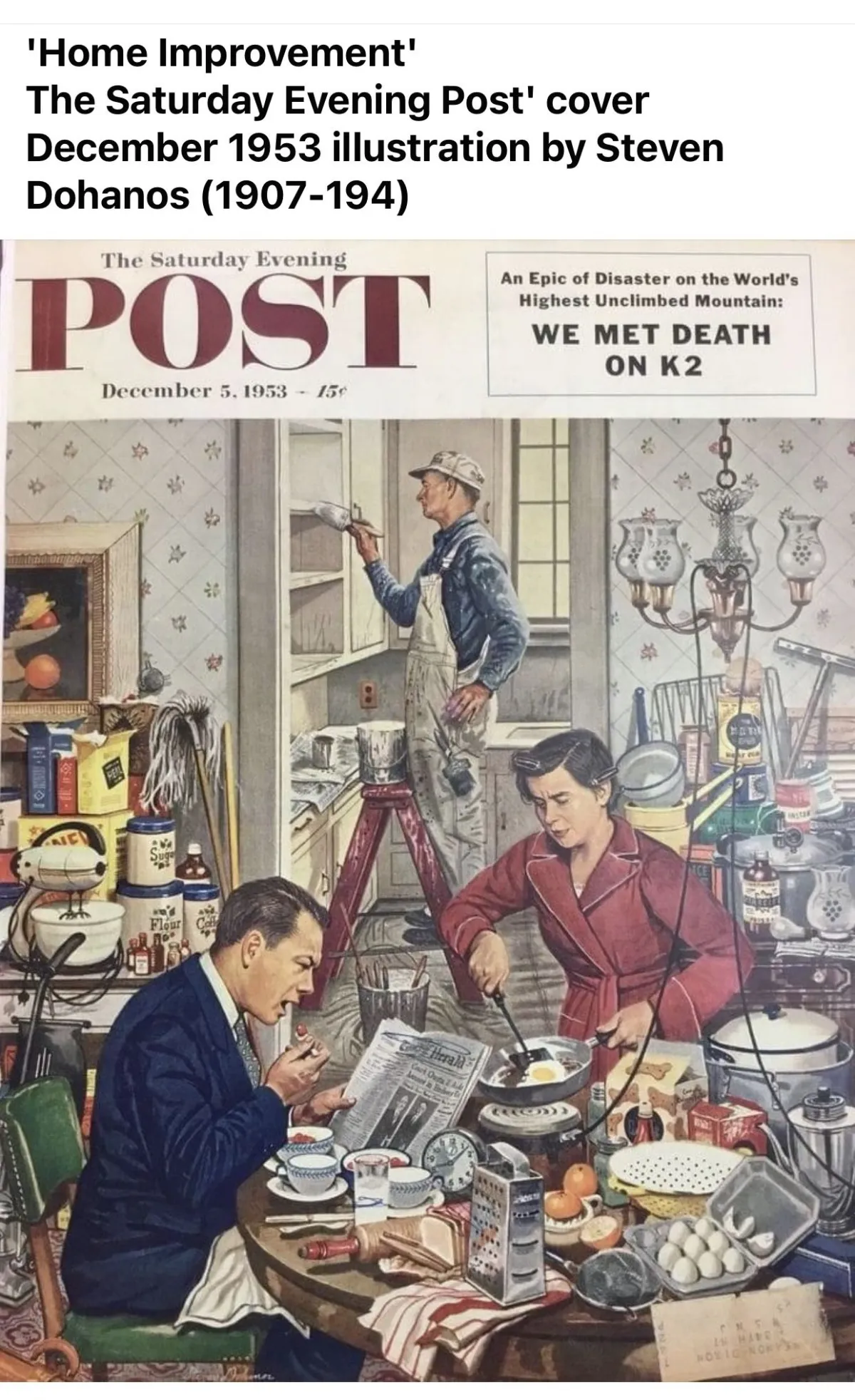 Photo: Norman Rockwell, via i.pinimg.com
You went twice a year. You paid what you owed. You left with clean teeth and maybe a fluoride rinse that tasted like artificial grape. And then you went home and didn't think about it again until December.
That world is gone. And the gap it left behind is bigger than most people want to admit.
The Era When a Filling Was Just a Filling
In the 1950s and 1960s, a routine dental visit cost somewhere between three and eight dollars — roughly equivalent to a modest dinner out. A working-class factory worker, a school bus driver, a grocery clerk could absorb that without rearranging the household budget. Dental care wasn't a luxury line item. It was just part of life, filed somewhere between the electric bill and the kids' school supplies.
More importantly, the dentist who cleaned your teeth in 1962 was likely the same one who pulled your father's wisdom tooth in 1948 and would eventually see your own kids through their first cavity. He knew your family's history — not from a digital chart, but from memory. He knew your mother had soft enamel. He knew your older brother was terrified of the drill and needed an extra few minutes to settle in.
That kind of accumulated knowledge had real medical value. Patterns got noticed. Small problems got caught early, before they became expensive ones. And because the relationship was ongoing and personal, people actually showed up.
When the Corporate Model Moved In
The shift didn't happen overnight. It crept in slowly across the 1980s and 1990s as dental service organizations — the industry term for the chains that now dominate the market — began consolidating independent practices under corporate ownership. The solo practitioner who owned his building and set his own fees started looking financially vulnerable by comparison.
By the 2010s, corporate dental chains had become a dominant force. Names like Aspen Dental, Heartland Dental, and Pacific Dental Services expanded aggressively, often targeting middle-income and lower-income communities with promises of convenience and affordability. The reality for many patients told a different story: production-focused models that incentivized volume, rapid chair turnover, and upsells on procedures that ranged from genuinely necessary to aggressively optional.
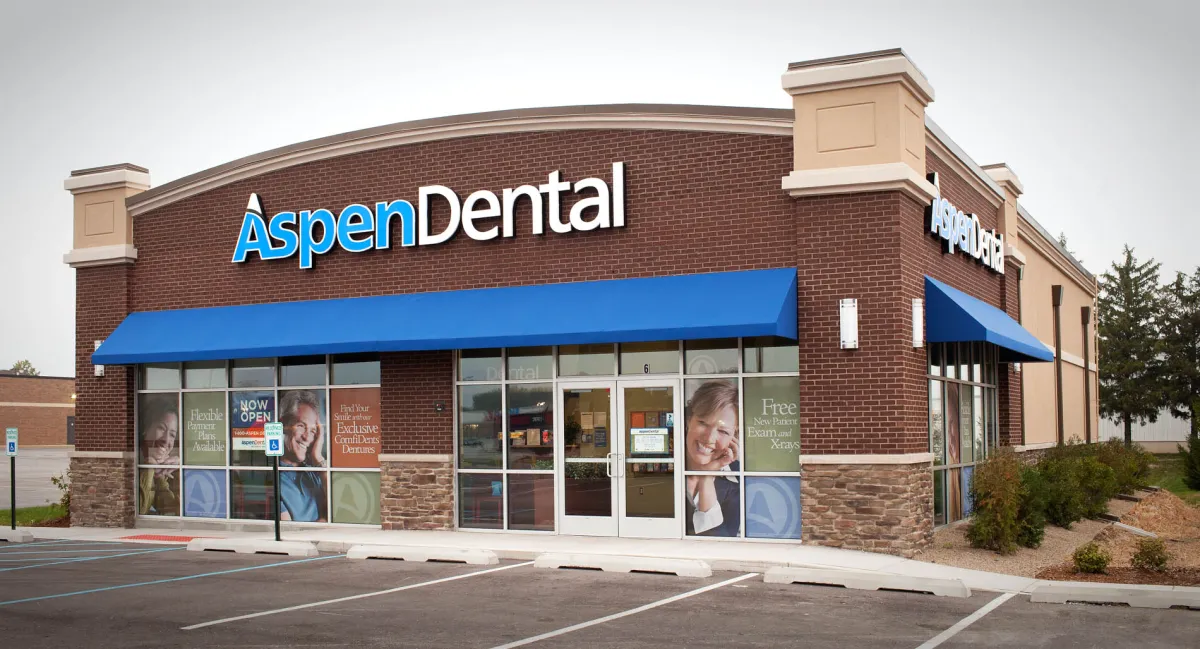 Photo: Aspen Dental, via www.lmteam.com
The dentist you saw this visit might not be the same one you saw last time. The person reviewing your X-rays may have never met you. The relationship — that quiet, boring, deeply useful continuity — had been replaced by a transaction.
The $74 Million Problem Nobody Talks About Enough
Here's the number that should stop people cold: according to the National Association of Dental Plans, roughly 74 million Americans currently have no dental insurance whatsoever. And even among those who do carry coverage, the annual benefit caps — often stuck at $1,000 to $1,500, a ceiling that hasn't meaningfully moved since the 1970s — can evaporate after a single crown.
 Photo: National Association of Dental Plans, via www.nadp.org
A root canal and crown today can run $2,000 to $3,500 out of pocket, depending on where you live and which tooth is involved. A full set of dentures can exceed $4,000. Even a basic cleaning at a private practice in a mid-sized American city routinely costs $150 to $300 without insurance.
The result is entirely predictable: people skip care. They wait until a manageable problem becomes an emergency. They pull their own teeth — and yes, that still happens in 2024, more than most Americans realize. Rural emergency rooms regularly treat patients for dental abscesses that could have been prevented by a $90 checkup years earlier.
Something that was once unremarkable — a routine part of being a functioning adult in America — has quietly become a privilege.
What We Actually Lost
It would be easy to romanticize the old neighborhood dentist. The equipment was cruder. Anesthesia options were more limited. Plenty of people still dreaded the visit. But the underlying structure of that system — local ownership, stable relationships, fees scaled to what ordinary workers actually earned — created a floor of accessibility that the current model has largely removed.
The solo practitioner who set his own fees could also use his own judgment about what to charge a patient going through a hard stretch. That kind of informal flexibility doesn't exist inside a corporate billing department.
There's also something to be said for the continuity of care itself. A dentist who has watched your gums for twenty years notices gradual changes that a fresh-eyes provider reviewing a new chart simply cannot. Preventive dentistry — the kind that saves money and pain in the long run — depends heavily on that ongoing relationship.
The Shift We're Still Living With
Dental care in America has never been fully integrated into the broader healthcare system, a historical quirk that has always left it more exposed to market forces than, say, a visit to your primary care physician. That structural vulnerability made it easier for costs to climb without the same political attention that hospital pricing or prescription drug costs attract.
Some states have expanded dental coverage under Medicaid in recent years. Community health centers offer sliding-scale dental services in many cities. Dental schools provide low-cost care performed under supervision. These are real options, and they matter. But they are workarounds for a system that drifted away from ordinary people without most of us registering the moment it happened.
The neighborhood dentist who knew your baby teeth and your parents' names wasn't just a nostalgic figure. He was part of an infrastructure that treated oral health as something everyone deserved access to — not a premium add-on for people who could afford the right insurance plan.
We didn't decide to give that up. We just gradually stopped noticing it was gone.