The Weekend Warriors Who Kept the Game Alive: How America Lost Its Army of Volunteer Referees
The Saturday Morning Regiment
Every Saturday morning for thirty-two years, Bill Henderson laced up his black cleats, grabbed his whistle, and drove to whatever soccer field needed him most. Sometimes it was the elementary school across town for a 6-year-old game where the biggest challenge was keeping kids from picking dandelions. Other times it was the high school complex for a heated rivalry match where parents needed more supervision than players.
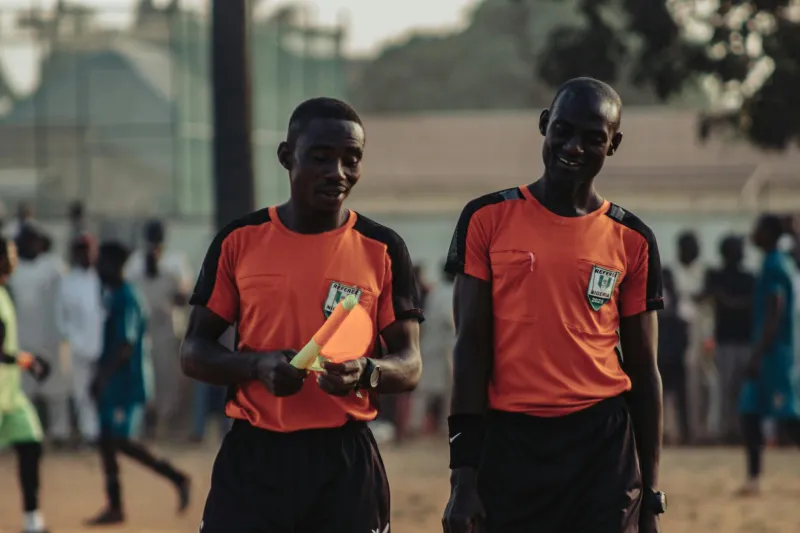
 Photo: Bill Henderson, via i.redd.it
Bill wasn't paid much—maybe $25 for a youth game, $40 for high school. But he wasn't there for the money. He was there because somebody had to be, and he remembered what it felt like when nobody showed up and games got cancelled.
Last spring, Bill hung up his whistle for good. Not because of age or injury, but because he'd finally had enough of parents screaming at him from the sidelines, questioning every call, and treating him like he was personally responsible for their child's athletic future.
Bill's departure wasn't unique. Across America, the volunteer referees who kept youth sports running for generations are walking away. And we're just now realizing how much we depended on them.
The Invisible Infrastructure
For most of the 20th century, American sports ran on an invisible network of local volunteers. These weren't professional officials working their way up to college or pro games. They were teachers, mechanics, retirees, and parents who learned the rules, bought their own uniforms, and showed up every weekend to make sure kids could play.
The system worked because expectations were different. Parents understood that volunteer refs were doing their best with limited training. Coaches knew that arguing every call would drive away the people they needed most. Players learned to respect authority figures who were giving up their weekends for community service.
In small towns especially, being a referee was a respected community role. The guy who called your Friday night football games might also be your insurance agent or your kid's math teacher. There was social accountability built into the system—you didn't scream at someone you'd see at church on Sunday.
When Good Enough Was Good Enough
The beauty of amateur officiating was its pragmatic approach to perfection. Everyone understood that Volunteer Bob calling the Little League game wasn't going to get every pitch right. The strike zone might be a little wide, or he might miss a close play at second base. But kids learned to play through bad calls, coaches learned to focus on teaching rather than protesting, and games got played.
This wasn't about lowering standards—it was about understanding what standards actually mattered. The volunteer referee's job was to keep games safe, fair, and moving. Perfect ball-and-strike calls were less important than making sure nobody got hurt and everyone had fun.
Parents in this era generally understood the deal: if you wanted professional-quality officiating, you needed to pay professional prices. Since most youth sports operated on shoestring budgets, volunteer officials were not just acceptable but essential.
The Professionalization Trap
Somewhere in the 1990s, American sports culture began demanding perfection at every level. Youth games were treated like college contests. Parents invested thousands in club teams and travel leagues, then expected officiating quality to match their financial commitment.
This created an impossible situation for volunteer referees. They were being held to standards that required extensive training, regular evaluation, and constant rule updates—but they were still working for gas money and community spirit.
Officiating organizations responded by implementing more rigorous certification requirements. Refs needed to attend clinics, pass tests, and maintain continuing education credits. These changes improved quality but also raised barriers to entry. The casual volunteer who just wanted to help out could no longer easily jump in.
The Abuse Epidemic
As youth sports became more competitive and expensive, parent behavior deteriorated dramatically. The volunteer referee went from respected community member to convenient target for frustrated adults living vicariously through their children's athletic performance.
Studies now show that verbal abuse of officials has become normalized in American youth sports. Referees report being threatened, followed to their cars, and subjected to profanity-laced tirades over calls in games involving 8-year-olds.
The irony is devastating: the very people who made youth sports possible became the scapegoats for everything wrong with youth sports.
The Cancellation Crisis
Today, referee shortages have reached crisis levels across the country. High school athletic associations report that lack of officials is the primary reason for cancelled games. Youth leagues struggle to find enough referees to cover their schedules. Some regions have consolidated entire conferences because they can't staff games.
The numbers tell the story: Ohio has lost 40% of its high school football officials in the past decade. California youth soccer reports a 30% decline in registered referees since 2015. Texas high school athletics cancelled more than 1,000 games last season due to official shortages.
The Price of Perfection
When volunteer referees became scarce, leagues turned to professional officiating companies. The results are predictable: better calls, higher costs, and fewer games.
What used to cost a youth league $50 per game now costs $150. High school games that were covered by local volunteers for $75 now require $200 payments to attract officials willing to travel from other regions. The financial burden falls on families already stretched thin by rising youth sports costs.
The Social Cost
Beyond the economics, we lost something harder to quantify when volunteer referees disappeared. These officials were community members with stakes in local success. They knew the kids, understood the context, and cared about more than just getting calls right.
The traveling professional referee has no investment in community relationships. They arrive, call the game, collect payment, and leave. There's no accountability beyond technical competence, no connection to the broader social fabric that youth sports was supposed to strengthen.
What We Gave Up
The decline of volunteer officiating represents a broader shift in American community life. We traded good enough for perfect, local for professional, invested community members for expensive specialists.
In the process, we lost thousands of adults who were actively involved in youth development. We lost mentorship opportunities for young people who might have learned officiating skills. We lost the democratic spirit that made sports accessible to everyone, not just families who could afford premium everything.
Most significantly, we lost the understanding that community activities require community investment. The volunteer referee represented a social contract: I'll give my time to make this work, and you'll treat me with respect while I do it.
When that contract broke down, we didn't just lose referees—we lost a model for how communities can support themselves through mutual commitment and shared responsibility.
The games go on, when officials can be found. But something essential about American sports culture got whistled dead along the way.