Your Grandkids Can't Inherit a Spotify Playlist: The Quiet Death of the Record Shelf
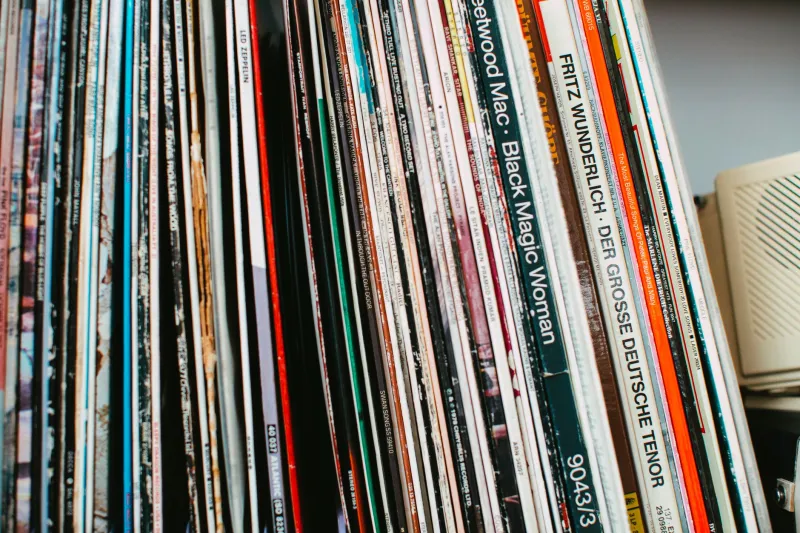
Somewhere in a basement in Cleveland, there's a crate of records that belongs to a man who hasn't played them in twenty years. He keeps them anyway. They're his — legally, physically, permanently — and no shareholder vote or licensing dispute can take them from him. Try saying the same thing about your streaming library.
When Buying Music Meant Buying Music
For most of the 20th century, the transaction was simple: you exchanged money for an object that was yours until you destroyed it or gave it away. A record, an eight-track, a cassette, a CD. You could loan it to a friend, scratch it, sell it at a garage sale, or leave it to your kids. Album art was furniture for the soul — the shelf in the living room was a autobiography you could read at a glance.
Ownership shaped taste, too. Buying an album was a commitment device. You paid $9 for twelve songs, so you listened to all twelve — including track seven, the weird one that would've been skipped on any playlist but ended up becoming your favorite. Scarcity forced depth. The record shelf was a curated identity, assembled one deliberate purchase at a time.
The Great Access Swap
Streaming didn't just change the format; it changed the deal. You don't own 100 million songs. You rent a guest pass to a catalog that exists at the pleasure of licensing agreements. Songs vanish overnight when contracts lapse. Services shut down and take libraries with them. When Spotify delists a track, your 'library' shrinks by one — something no record owner ever had to worry about.
The economics tell the story plainly. A vinyl album cost roughly 1% of a month's take-home pay in 1975. Today, a streaming subscription is a rounding error. Music went from a purchase you saved for to a utility you forget you're paying for. That's a genuine victory for access — but the cheapness changed our relationship with the music itself. When everything is available, nothing is precious.
What the Playlist Can't Do
Here's the part that should bother us: a streaming queue can't be lent, can't be sold, and can't be inherited. Your grandfather's Miles Davis records carry his fingerprints — literally, on the sleeves. What does a curated playlist pass down? A username and a password nobody's supposed to share.
There's also a psychological shift worth naming. Ownership encouraged identity; access encourages mood. We used to say 'this band is my favorite.' Now we say 'this song fits my workout.' The record shelf announced who you were to anyone who walked in the room. The algorithmic playlist is private, provisional, and gone the moment you cancel.
None of this means streaming is bad. It rescued music from the bargain bin and put more songs in more ears than the record industry ever dreamed. But let's not pretend the trade was free. We swapped permanence for convenience and called it progress.
The vinyl revival isn't nostalgia for inferior sound quality. It's a generation instinctively reaching for something the stream can't provide: a thing you can hold, that holds its value, and that nobody can take away. The record shelf understood something we're only now relearning — that some things are worth owning precisely because owning them means they're yours.