The Summer That Belonged to Nobody: When Kids Had Three Months and No Plan
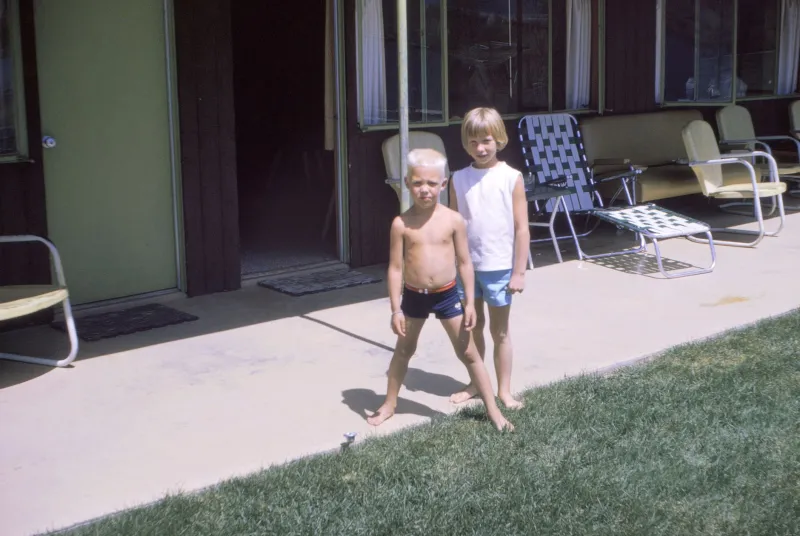
The last day of school used to feel like being released from something. Not just released from homework and hall passes, but released into a kind of freedom that had no modern equivalent. Three months stretched out ahead like a country without roads. You didn't know exactly where you'd go or what you'd do. That was the whole point.
For generations of American kids, summer was defined by its absence of structure. You woke up when you woke up. You ate cereal in front of cartoons. You drifted outside and found other kids doing the same thing, and together you invented something to do. Nobody scheduled it. Nobody supervised it. Nobody turned it into a line on a college application.
That summer is gone. And its disappearance is one of the more quietly significant shifts in American life over the past forty years.
The Geography of a Free Afternoon
In the 1960s and 1970s, a summer afternoon in most American neighborhoods looked like controlled chaos. Kids were everywhere — on bikes, in empty lots, in creeks and backyards and the woods behind the subdivision. Parents knew roughly where their children were in the way you know roughly where your keys are: somewhere nearby, probably fine.
The range kids traveled on their own was remarkable. Studies that have tried to document this found that children in the mid-twentieth century routinely roamed a mile or more from home unsupervised. They built forts, organized pickup games, got into minor trouble, resolved conflicts without adult mediation, and came home dirty and exhausted in time for dinner. There was no app tracking their location. There was no check-in system. There was just the understanding that kids were out there doing kid things and that this was normal and fine.
Boredom was a feature, not a bug. When you had nothing to do, you eventually invented something. That invention process — the negotiation, the creativity, the failure and retry — was doing something important that no organized activity could replicate.
The Scheduling of Childhood
The transformation didn't happen all at once. It accelerated through the 1980s and 1990s as a combination of forces reshaped how American parents thought about safety, achievement, and their responsibilities as caregivers.
Crime coverage intensified on local news. High-profile child abduction cases — rare in statistical terms but devastating in cultural impact — convinced a generation of parents that the world outside was more dangerous than it actually was. Kids were pulled inside. Doors were locked earlier. The unsupervised afternoon became an anxiety trigger rather than a normal feature of childhood.
At the same time, the college admissions arms race was beginning. By the 1990s, parents with college-bound aspirations were learning that elite universities wanted more than good grades. They wanted demonstrated excellence in structured activities — sports, music, community service, academic enrichment. Summer became a resume-building opportunity. Camp stopped being about swimming and campfire songs and started being about skill acquisition and competitive advancement.
The youth sports complex exploded. Travel teams, which barely existed before the 1990s, became a dominant feature of middle-class childhood. A kid who showed any athletic aptitude could spend their entire summer in a van driving between tournaments in distant cities, playing organized games against other kids doing the same thing. The cost — in time, money, and the ordinary pleasures of an unscheduled day — was enormous.
What It Costs Now
The professionalization of American childhood is genuinely expensive. A summer of organized activities — a few weeks of specialty camp, a season of travel sports, some academic tutoring to prevent learning loss — can run a middle-class family several thousand dollars. Families at the top of the income distribution spend far more.
This creates a two-tier system with an uncomfortable irony built into it. Wealthier children spend their summers in intensely structured enrichment programs. Lower-income children, whose parents can't afford camps or don't have the scheduling flexibility to drive them to organized activities, often spend their summers in something closer to the old unstructured model — but without the safe neighborhoods, the trusted adult networks, and the cultural infrastructure that made that freedom workable in earlier generations.
The thing that wealthy families are now paying to eliminate — unstructured time — turns out to be something researchers increasingly believe is essential to healthy development. Studies on childhood play consistently find that self-directed, unstructured activity builds executive function, emotional regulation, and creative problem-solving in ways that organized programs simply don't. The boredom that parents are now spending thousands to prevent was, it turns out, doing something important.
The Kid Who Had to Figure It Out
There's a specific kind of competence that comes from being bored and having to solve it yourself. When you're ten years old and it's a Tuesday in July and there's nothing to do and nobody to tell you what to do, you have to make a decision. You have to initiate something. You have to convince other people to join you, negotiate the rules, handle it when someone cheats, and figure out what to do next when the whole thing falls apart.
This is not a small thing. This is, in miniature, most of adult life.
The kid who spent every summer in organized programs — coached, refereed, evaluated, and transported by adults — often arrives at adulthood having been very busy but having had very little practice at the particular skill of figuring out what to do with unstructured time. That's a gap that's increasingly visible on college campuses, in workplaces, and in the rising rates of anxiety among young adults who have always known what they were supposed to be doing next and suddenly don't.
Three Months That Taught You Who You Were
Ask someone who grew up in the 1960s or 1970s about their best summer memory. It probably isn't a camp activity or a tournament victory. It's something that happened spontaneously — a long bike ride that ended somewhere unexpected, a game that evolved over three weeks in the same backyard, a friendship forged in the particular crucible of having nothing to do together.
Those experiences weren't accidental byproducts of bad planning. They were the point. Summer used to be the time when kids got to be people, not projects. When the calendar was empty not because nobody cared, but because everyone understood that empty space was where something real could grow.
We filled that space with good intentions and a lot of money. What we got in return is more polished and more measurable than what we gave up. Whether it's better is a question worth sitting with — ideally on a porch somewhere, with nowhere to be and no particular plan.