Sign-Ups Were First Come, First Served: Before Youth Sports Became a Business
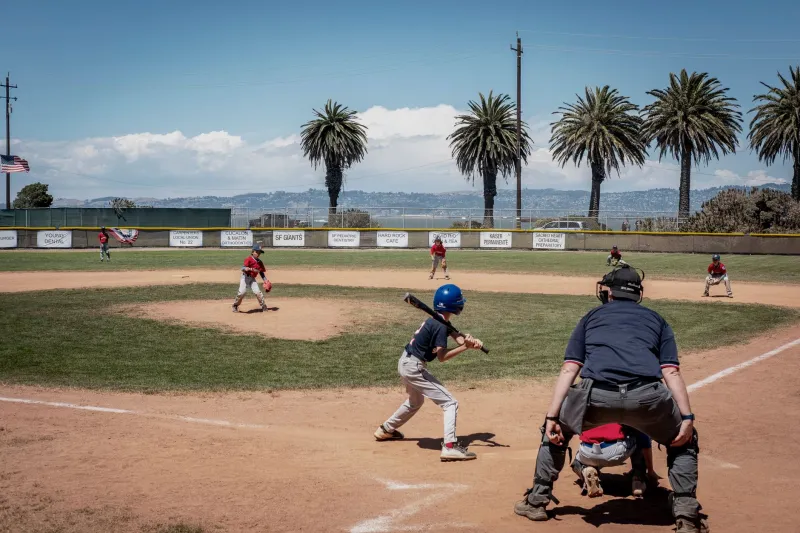
In the spring of 1978, a ten-year-old in suburban New Jersey walked into the Parks and Recreation office with his dad, wrote his name on a clipboard, paid six dollars in registration fees, and was assigned to a Little League team. He wasn't evaluated. Nobody assessed his swing mechanics or his arm strength. He wasn't placed on a competitive tier or told to attend a showcase. He just... signed up. And then he played.
That process — so simple it barely registers as a process — is now largely extinct.
When the Field Was for Everyone
Recreational youth sports leagues were a fixture of mid-twentieth century American community life. They were administered by parks departments, churches, and local volunteer organizations. Costs were kept minimal by design, because the point was participation, not excellence. A kid who was slow, uncoordinated, or simply mediocre had just as much right to a spot on the team as the kid who was clearly going somewhere.
Coaches were dads. Uniforms were T-shirts. The scoreboard at the end of the season mattered a lot to the kids and almost not at all to the adults running the program. The goal was simple: get kids outside, get them moving, teach them some basics about teamwork and competition, and send them home tired.
The system had real flaws. Coaching quality was wildly inconsistent. Girls were largely excluded from organized athletics until Title IX changed the landscape in the 1970s. Kids with genuine talent sometimes found the recreational environment limiting. But the floor was low and the door was wide open, and that combination meant that millions of American kids who would never play beyond their mid-teens still got years of genuine athletic experience.
The Tryout Culture Arrives
Competitive youth sports have always existed alongside recreational leagues. Travel baseball and elite club soccer programs have been around in some form since the 1970s. But for most of that era, they were a parallel track — an option for the genuinely talented, not a replacement for the neighborhood league.
The transformation began accelerating in the 1990s and hit full speed in the 2000s. Elite club programs grew in size and influence. Recreational leagues began losing participants to more competitive alternatives. And then something subtler happened: the definition of "competitive" kept shifting downward in age. Club soccer programs that once recruited twelve-year-olds began holding tryouts for eight-year-olds. Travel baseball showcases appeared for ten-and-under divisions. The pressure to identify and develop talent earlier and earlier reshaped what youth sports looked like at every level.
By the 2010s, the industry — and it had become an industry — had developed its own economy. Private coaching. Skills academies. Showcase tournaments with entry fees in the hundreds of dollars. Equipment packages that cost more than a month's groceries. Year-round training schedules that effectively eliminated multi-sport participation. The recreational league that once anchored community athletic life shrank in stature, funding, and enrollment.
The Numbers Tell a Hard Story
The Aspen Institute's Project Play has been tracking youth sports participation data for years, and the trends are stark. Overall youth sports participation has declined significantly over the past two decades, even as spending on youth athletics has increased dramatically. The average American family with a child in organized sports now spends over $1,000 per year. Families with children in elite travel programs routinely spend $5,000 to $20,000 annually when you factor in fees, travel, equipment, and private instruction.
The result is a sport system that is simultaneously more expensive and less inclusive than it was a generation ago. Kids from lower-income households have been effectively priced out of organized athletics at rates that would have seemed implausible in 1980. A 2019 survey found that children from families earning under $50,000 a year were far less likely to participate in organized sports than those from families earning over $100,000 — a gap that has grown substantially since the 1990s.
Meanwhile, the kids who do participate are increasingly funneled into single-sport specialization at younger ages. Sports medicine physicians have documented a corresponding spike in overuse injuries among adolescent athletes — stress fractures, tendinopathies, and joint problems that used to be seen primarily in adult athletes are now common in thirteen and fourteen-year-olds who have been playing the same sport year-round since they were eight.
The Myth of the Pathway
The driving logic behind elite youth sports is investment in future opportunity. Parents spend money on club teams and private coaching because they believe — or hope — it improves their child's chances of playing in high school, earning a college scholarship, or reaching professional levels. The math rarely works out.
Less than four percent of high school athletes play college sports at any level. Fewer than two percent receive any athletic scholarship money. The odds of a travel baseball player reaching the major leagues are roughly equivalent to the odds of winning a small lottery. The pipeline that elite youth sports promises to provide is, for the vast majority of participants, a financial transaction with a very uncertain return.
What's been lost in this calculus is the simpler value that recreational sports always provided: the experience of playing. Not training for something. Not developing toward something. Just playing, for the intrinsic satisfaction of it, with other kids in your neighborhood, on a team that cost your parents six dollars and a few Saturday mornings.
What the Clipboard Knew
There's something worth recovering in the old model — not the flaws, but the philosophy. The idea that a sport belongs to whoever wants to play it, regardless of talent level or family income. The idea that an eight-year-old's relationship to athletics doesn't need to be optimized. The idea that a kid who peaks at twelve and loses interest at fourteen still deserved those years on the field.
The clipboard on the Parks and Recreation desk wasn't a sophisticated system. It didn't identify future stars or develop elite performers. But it let everyone in. And in a country that likes to talk about equal access and opportunity, that might have been its most important feature.