The Dentist Who Knew Your Name and Charged What You Had: How a Neighborhood Staple Became a Luxury Service
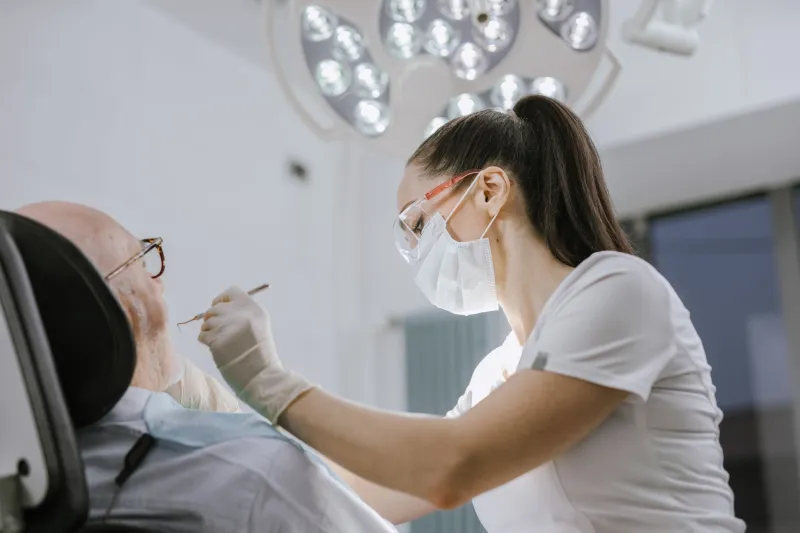
The Chair at the End of the Hallway
Somewhere in mid-century America, there was a dentist named Dr. Kowalski or Dr. Brennan or Dr. Huff — and he worked out of a converted room in a building two blocks from where most of his patients lived. He treated your grandfather's molars, straightened your father's teeth, and filled your first cavity before you were old enough to understand what a cavity actually was. He kept paper files on everyone. He knew which kids were nervous and which ones were brave. He sent birthday cards.
A cleaning cost what dinner at a diner cost. A filling wasn't much more. And if your family was going through a hard stretch, he'd work something out. Because that's what neighborhood professionals did.
That version of dental care — personal, accessible, priced for ordinary people — has quietly disappeared from American life. What replaced it is something quite different.
How It Actually Used to Work
Through the 1950s and into the 1970s, American dental care was largely built around solo practitioners. A dentist trained, set up a practice, and spent decades serving the same community. Overhead was modest. Equipment was straightforward. The relationship between patient and provider was direct — no insurance coordinator, no billing department, no upsell menu of optional procedures.
According to historical American Dental Association data, a routine office visit in 1960 cost somewhere between three and eight dollars depending on location. Adjusted for inflation, that's roughly thirty to sixty dollars in today's money. A full extraction might run fifteen dollars. Dentures were within reach of a working-class budget.
 Photo: American Dental Association, via iconape.com
More importantly, most of what dentists did was preventive and restorative. Clean the teeth. Fill what needed filling. Pull what couldn't be saved. The business model wasn't complicated because the service wasn't complicated.
When the Business Model Changed
The shift didn't happen overnight. It crept in through the 1980s and accelerated through the 1990s as corporate consolidation reached healthcare. Dental management organizations — companies that own and operate dental practices at scale — began buying up solo practices and regional clinics. Today, corporate dental chains account for a significant and growing share of American dental visits.
The economics changed fundamentally. Corporate practices operate with shareholders, regional managers, and revenue targets. Dentists working inside those systems often report pressure to recommend procedures — whitening packages, night guards, additional X-ray series — that generate margin beyond basic care. Patients who came in for a cleaning leave with a treatment plan that reads like a home renovation estimate.
Insurance made it stranger, not simpler. Most dental insurance plans haven't meaningfully increased their annual maximums in decades. A plan that covered $1,000 of dental work in 1980 might still cap out at $1,500 today, while the cost of that same work has multiplied several times over. The coverage that's supposed to make care affordable often barely dents the bill.
The Numbers That Tell the Story
Here's where the shift becomes impossible to ignore. The American Dental Association estimates that roughly 74 million Americans have no dental insurance at all. A separate analysis found that even among people who do have coverage, out-of-pocket dental spending has climbed steadily year over year.
A routine cleaning and exam at a mid-range dental office in most American cities now runs between $150 and $350 without insurance. Add a couple of X-rays, a basic filling, and maybe a conversation about a crown, and you're looking at a visit that can easily exceed $400 before anything serious has even been addressed. A single crown — a common enough procedure — routinely costs $1,200 to $1,800.
The result is predictable. People skip care. The American Dental Association's own research has consistently found that cost is the primary reason adults avoid the dentist. That avoidance doesn't make dental problems go away. It makes them worse, more expensive, and in some cases genuinely dangerous.
What Got Lost Besides the Affordable Prices
There's something beyond the dollars worth noticing here. The neighborhood dentist who treated three generations of the same family wasn't just providing a service. He was part of a web of community relationships that made healthcare feel human.
He knew your medical history because he remembered it, not because a system had flagged it. He could tell when you were anxious and adjust accordingly. He wasn't working against a corporate quota. The transaction had a personal dimension that spreadsheets can't capture.
That intimacy isn't entirely gone — there are still independent practitioners doing exactly this kind of work — but they're increasingly harder to find, and their pricing has risen with the market regardless of their intentions.
The Shift We Barely Noticed
Dental care didn't transform dramatically in a single moment. It drifted. Solo practices aged out and were absorbed. Insurance products quietly stayed flat while costs climbed. Corporate chains expanded into suburban strip malls with bright signage and extended hours and financing options that turned a filling into a monthly payment.
The result is a system where a basic health service that was once as routine as a haircut now triggers genuine financial anxiety for a substantial portion of the population. Kids from lower-income families are more likely to have untreated tooth decay than their wealthier peers. Adults in their forties and fifties are losing teeth that could have been saved with earlier, cheaper intervention.
Dr. Kowalski would have found that baffling. The chair is still there. The tools aren't that different. What changed was everything around them.