No Reservations, No Reviews, No Plan: Inside the Great American Mystery Road Trip
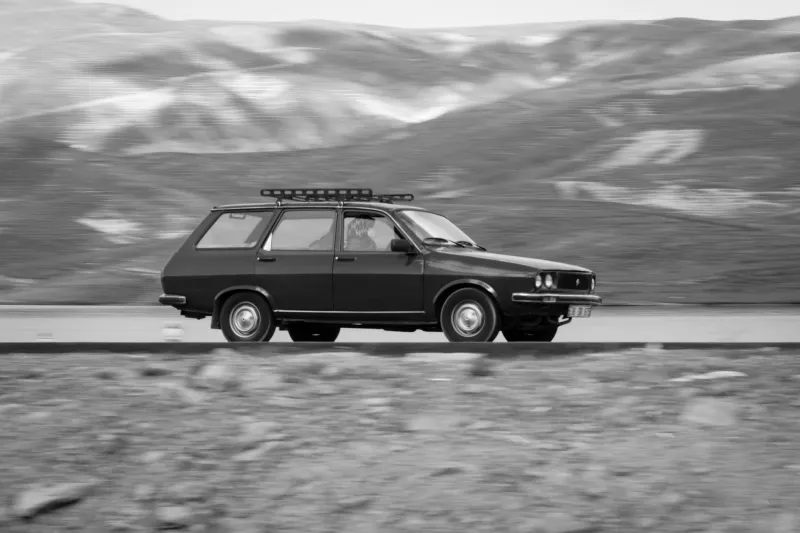
Picture this: it's June 1962, and a family of five from Dayton, Ohio is pointing their Ford Country Squire west with nothing booked, nothing reserved, and nothing planned beyond a general idea that the Grand Canyon exists somewhere out there. Nobody has read a review. Nobody knows where they're sleeping tonight. And remarkably, nobody is worried about it.
The Map Was the Only App
Navigation meant a fold-out map from a Texaco station — free with a fill-up — that Dad would wrestle with across the front seat while Mom navigated from the middle. The map showed you where you were, roughly, and nothing about what awaited you. A two-lane stretch of Route 50 through Nevada was just a line. Whether it delivered you to a charming café or a gas station selling warm Nehi was a genuine mystery.
Wrong turns weren't emergencies. They were the itinerary. Getting lost outside Santa Fe might land you at a roadside stand selling blue corn tamales from a woman who'd tell you about a Trading Post two miles up the road that the guidebooks never mentioned. That was the review system: word of mouth, delivered by strangers at the counter.
Sleeping on Faith
Lodging worked on a simple principle: you drove until you saw a vacancy sign, then you pulled in. The American motel boom of the 1950s and '60s existed precisely because millions of families were doing exactly this. Mom-and-pop motels lined the highways like beads on a string — $8 a night, a pool shaped like a kidney, and a manager who might personally recommend the best steakhouse in town.
If the neon said NO VACANCY, you drove to the next one. There was always a next one. The idea that a family might sleep in the car because every room within 200 miles was algorithmically booked and priced at $340 simply didn't compute.
Dinner Was Whatever the Road Offered
Eating was an adventure with no filter. Diners, truck stops, drive-ins with carhops on roller skates — you stopped when hungry and hoped for the best. Sometimes you found a diner where the pie was legendary and the waitress called you 'hon.' Sometimes you found a place where the meatloaf was a war crime. You took the good with the bad, and the stories stuck to both.
Contrast that with today's traveler, standing in a parking lot in Tulsa, phone in hand, scrolling 400 reviews of a breakfast spot to determine whether the avocado toast is worth 3.8 stars. We've traded the gamble for the guarantee — and somewhere in that trade, the surprise packed its bags.
What We Actually Lost
Here's the thing modern planning apologists miss: the unplanned trip wasn't just logistically different, it was psychologically different. When nothing is booked, everything is possible. The family that stumbles onto Wall Drug in South Dakota or a rodeo in Cheyenne because they happened to be there that night experiences something no itinerary can produce — the sensation of being found by an experience rather than purchasing one.
Today's vacations are optimized to the minute. We know the ratings, the prices, the parking situation, and the weather before we leave the driveway. It's efficient. It's also, occasionally, a little dead on arrival. The trip is pre-lived through the screen before the car ever rolls.
Nobody's arguing we should ditch the GPS and hope for the best with three kids in the backseat. Air conditioning alone justifies modern travel. But there's a case for leaving one day unplanned. One dinner undiscovered. One exit taken purely because the sign looked interesting.
The mystery road trip worked because uncertainty was the product. You couldn't read ahead on your own life. For a couple of weeks each summer, neither could your vacation.