Free Knowledge Used to Have a Home on Every Block. Then We Decided to Charge for It.
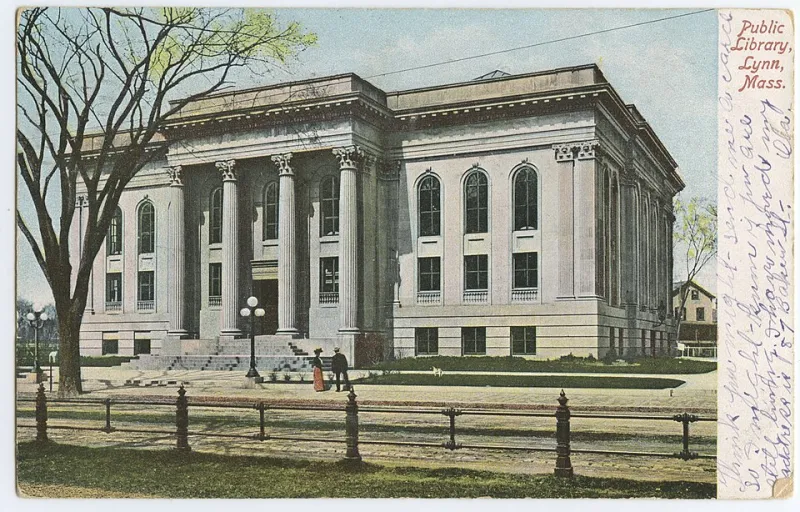
Photo: Zach from Salem, USA, Public domain, via Wikimedia Commons
The Card in Your Wallet That Opened Everything
It was a small rectangle, usually laminated, sometimes just cardstock. Your name was typed or handwritten on it, and it gave you access to more information than most people in human history had ever been able to reach. It was free. It worked everywhere in town. And you got it when you were seven years old.
The library card was, in a very real sense, America's original access pass. Long before anyone imagined the internet, public libraries were quietly doing something extraordinary: making the full weight of human knowledge available to anyone who walked through the door, regardless of income, background, or education. You didn't need a credit card. You didn't need a plan tier. You just needed to show up.
That era didn't vanish all at once. But it has, in important ways, vanished.
What the Library Actually Was
To understand what's been lost, you have to appreciate what the mid-century American public library actually provided. It wasn't just books — though the books alone were remarkable. A well-stocked branch in any mid-sized American city held encyclopedias, medical references, legal guides, business directories, local newspaper archives, job listings, maps, magazines, and periodicals covering everything from farming to foreign policy.
For working-class Americans who couldn't afford to buy reference materials, the library was the only place to access that kind of information. A first-generation immigrant trying to understand how to file for citizenship could find the forms and the guidance there. A small business owner researching a new market could spend an afternoon in the business section. A high school student writing a paper on the Korean War had access to the same sources as a college student across town.
 Photo: Korean War, via a57.foxnews.com
And then there were the librarians. This is the part that tends to get romanticized, but the romanticization is earned. Reference librarians were trained professionals with deep subject knowledge and a genuine mandate to help. You didn't type a query into a box and hope for the best. You talked to a person who listened, asked clarifying questions, and then pointed you toward exactly what you needed. They were, in every meaningful sense, human search engines — and considerably more reliable than the algorithmic kind.
The Slow Migration Behind the Paywall
The shift happened gradually enough that most people didn't track it in real time. Academic journals — once accessible through library subscriptions — moved to publisher platforms with per-article fees that could run thirty dollars for a single piece of research. Newspapers that once sat in reading room racks launched digital editions and then paywalled them. Reference databases that libraries licensed became increasingly expensive to maintain, quietly reducing what smaller branches could offer.
Meanwhile, the private sector stepped into the gap with a different proposition: we'll give you access, for a price. Streaming platforms for entertainment. Subscription news services for journalism. Premium apps for language learning, career development, and self-education. Individually, many of these services are genuinely good. Collectively, they've rebuilt the library's function as a series of monthly charges.
The average American household now spends over $200 a month on streaming and subscription services, according to various consumer spending surveys. That figure has climbed steadily year over year as platforms have raised prices and reduced what's available on free tiers. The bundle of subscriptions a reasonably curious person needs to replicate what a library card once provided for free now costs somewhere between $100 and $300 a month depending on what they're after.
The Equity Problem Nobody Wants to Say Out Loud
Here's the part that doesn't get discussed enough. When knowledge was housed in public libraries, access was genuinely equal in a way that the modern information landscape is not. The kid whose family couldn't afford books had the same library card as the kid whose family had a full bookshelf at home. The playing field wasn't perfectly level — it never is — but the library was a genuine equalizer.
The subscription model inverts that. The more money you have, the more information you can access. A family paying for the New York Times, a couple of streaming platforms, an academic database, and a few professional development tools has a fundamentally different information diet than a family that can't afford any of them. The gap isn't just in entertainment. It shows up in financial literacy, health information, career development, and civic knowledge.
 Photo: New York Times, via i.pinimg.com
Public libraries still exist, of course, and they still do important work. But funding cuts have reduced hours, staff, and collections at libraries across the country for decades. The institution that once anchored community information access has been systematically underfunded while its private replacements have been systematically enriched.
What the Shift Tells Us About Ourselves
There's something worth sitting with here. America built the public library system as a civic commitment — a collective decision that an informed citizenry required free access to information, and that providing it was a public responsibility. That commitment produced one of the most successful democratic institutions the country ever created.
The subscription economy didn't set out to dismantle that commitment. It just offered something shinier and more convenient, and enough people paid for it that the alternative slowly lost its cultural centrality.
The library card is still free. The library is still there. But the world it was built to serve has quietly moved somewhere that costs money to enter. And not everyone can afford the ticket.